
Wix UI Backoffice
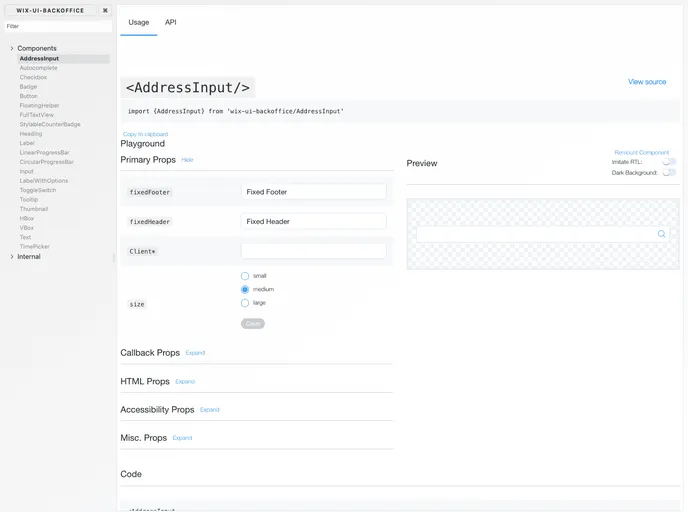

Common React UI components for all Wix backoffice React applications
Overview:
The Wix-UI-Backoffice is an archived and no longer supported product. It has been replaced by Wix-Style-React. Wix-UI-Backoffice was a UI library used for building internal Wix applications with a consistent and user-friendly design. It offered a range of components and features that helped developers create visually appealing and functional interfaces. However, as it is no longer supported, developers are encouraged to refer to Wix-Style-React for their UI needs.
Features:
- User-friendly design: Wix-UI-Backoffice provided a set of components designed to ensure a visually pleasing and user-friendly experience for Wix application users.
- Multiple UI components: The library offered a wide range of UI components such as buttons, modals, tables, and dropdowns, making it easy for developers to create complex and interactive interfaces.
- Consistent styling: Wix-UI-Backoffice provided a set of predefined styles and guidelines, ensuring a consistent look and feel across different parts of the application.
Summary:
Wix-UI-Backoffice was a UI library for building internal Wix applications with a consistent and user-friendly design. It offered a range of components and features that helped developers create visually appealing and functional interfaces. However, it is no longer supported, and developers are encouraged to refer to Wix-Style-React for their UI needs.
- React
React is a widely used JavaScript library for building user interfaces and single-page applications. It follows a component-based architecture and uses a virtual DOM to efficiently update and render UI components
- Templates & Themes

A template or theme refers to a pre-designed layout or structure that provides a basic framework for building a specific type of application or website. It typically includes good design, placeholder content and functional features, allowing developers to customize and fill in the details according to their specific needs.
- UI Kits & Components

A UI kit provides developers with a set of reusable components that can be easily integrated into a website or application. These components are pre-designed with consistent styling and functionality, allowing developers to save time and effort in the design and development process. UI kits can be either custom-built or third-party, and often include components for buttons, forms, typography, icons, and more.
- Typescript

TypeScript is a superset of JavaScript, providing optional static typing, classes, interfaces, and other features that help developers write more maintainable and scalable code. TypeScript's static typing system can catch errors at compile-time, making it easier to build and maintain large applications.