
Ngx Componentdestroyed
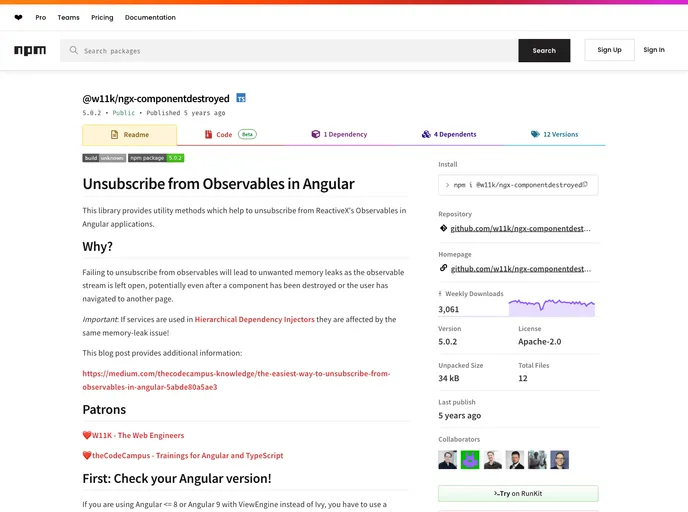

Unsubscribe from Observables in Angular Components
Overview
Unsubscribing from Observables in Angular can often be a challenging task, especially when it comes to managing memory leaks caused by open observable streams. Fortunately, there is a library that simplifies this process and ensures a smoother development experience in Angular applications. This library provides utility methods to help developers effectively manage subscriptions, particularly as applications transition across different versions of Angular.
The importance of properly unsubscribing cannot be overstated, as failing to do so can lead to unwanted memory leaks and other performance issues. This library is especially helpful for users of Angular 9 or later and offers clear guidance on how to handle subscriptions when components are destroyed or when users navigate through the application.
Features
-
Easy Unsubscription: Provides straightforward methods like
untilComponentDestroyed(this)ortakeUntil(componentDestroyed(this))to manage subscriptions effectively. -
Integration with OnDestroyMixin: Components can simply extend
OnDestroyMixinto ensure proper cleanup of observables when they are destroyed. -
Migration Guide: Clear instructions for upgrading from earlier versions (4.x.x to 5.x.x) streamline the transition for developers adjusting to new Angular versions.
-
TSLint Rule: Includes a TSLint rule from the sister project
@w11k/rx-ninja, which promotes best practices by enforcing the use of a terminator operator. -
Compatibility Notes: Offers insights on working with Angular's Ivy and ViewEngine, making it helpful for developers dealing with varying compilation settings.
-
Detailed Usage Instructions: Comprehensive guidelines on installation and usage ensure that developers can quickly adopt the library into their projects.
-
Component Lifecycle Awareness: Encourages developers to be mindful of the component lifecycle, including proper handling of
ngOnDestroy()methods. -
Performance Focused: Reduces the likelihood of memory leaks, ultimately enhancing the performance of Angular applications.
- Angular
Angular is a TypeScript-based open-source framework by Google for building dynamic single-page applications and cross-platform mobile apps with MVC architecture and a rich set of features.
- Typescript

TypeScript is a superset of JavaScript, providing optional static typing, classes, interfaces, and other features that help developers write more maintainable and scalable code. TypeScript's static typing system can catch errors at compile-time, making it easier to build and maintain large applications.