Carolina React Admin Dashboard Free
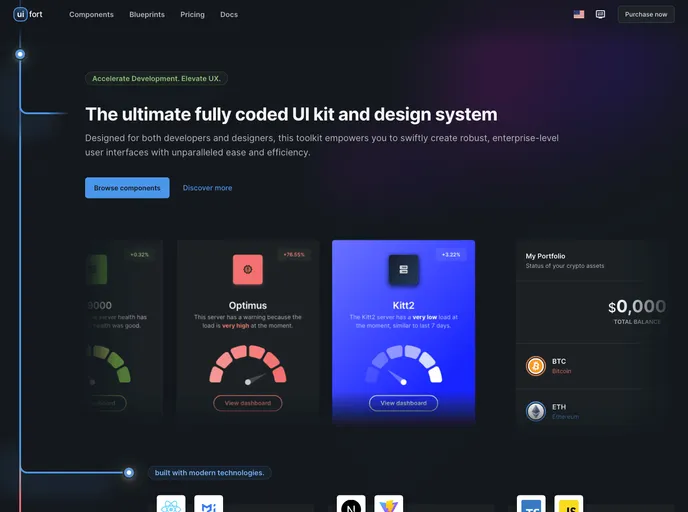

This free React admin template is powered by Material-UI components framework and features a clean and fresh design following Google's Material Design specifications.
Overview
This product is a software tool that helps in managing and tracking project versions and issues. It is aimed at developers and individuals working in software development teams. The tool provides features for version control, issue tracking, and collaboration.
Features
- Version Status: Easily check the current version of the product and ensure that you are using the latest version.
- GitHub Issues: Track and manage open issues in the product's GitHub repository.
- GitHub Pull Requests: Collaborate and review code changes through pull requests on GitHub.
- License: The product is distributed under a specific license, ensuring compliance and legal usage.
Summary
This software product is a useful tool for managing software versions and tracking issues in a collaborative development environment. It provides features such as version status checking, GitHub issue tracking, and pull request collaboration. By following the installation guide, users can easily set up the product and start using it for efficient version control and issue management.
- React
React is a widely used JavaScript library for building user interfaces and single-page applications. It follows a component-based architecture and uses a virtual DOM to efficiently update and render UI components
- SCSS
SCSS is a preprocessor scripting language that extends the capabilities of CSS by adding features such as variables, nesting, and mixins. It allows developers to write more efficient and maintainable CSS code, and helps to streamline the development process by reducing repetition and increasing reusability.
- Eslint

ESLint is a linter for JavaScript that analyzes code to detect and report on potential problems and errors, as well as enforce consistent code style and best practices, helping developers to write cleaner, more maintainable code.
- Framer Motion

Alpine.js is a lightweight JavaScript framework that simplifies the process of creating dynamic, reactive user interfaces on the web. It uses a declarative syntax that offers a higher level of abstraction compared to vanilla JavaScript, while being more performant and easier to use than jQuery.
- Redux
Redux is a state management library for JavaScript apps that provides a predictable and centralized way to manage application state. It enables developers to write actions and reducers that update the state in response to user interactions, server responses, and other events, and can be used with a variety of front-end frameworks and back-end technologies.