
Sveltest
Overview
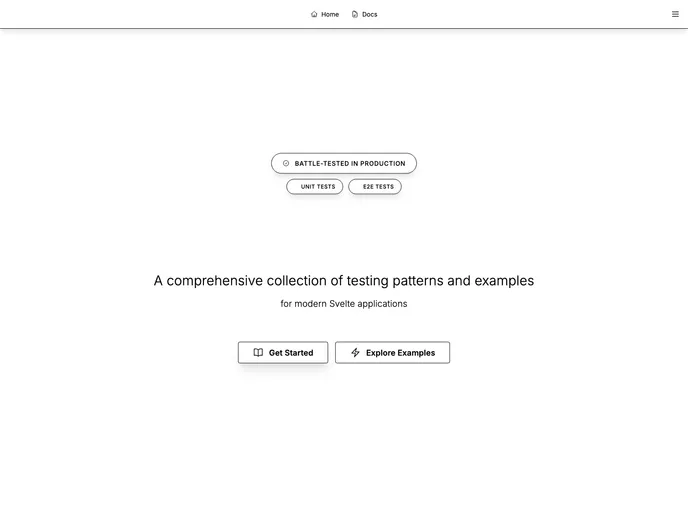
In the realm of modern web development, testing is crucial for ensuring robust and reliable applications. Sveltest is a comprehensive example project that showcases effective testing patterns using vitest-browser-svelte for Svelte 5 applications. Designed to reflect real-world scenarios, this project demonstrates a multi-layered testing approach, aiming to align client and server functionalities with minimal mocking in tests. Built as a companion piece to a personal blog post on transitioning from @testing-library/svelte, Sveltest is a well-structured resource for both developers and teams looking to enhance their testing methodologies.
The project encompasses a variety of testing strategies, including client-side component testing, server-side API testing, and SSR validation. With a focus on minimizing contract mismatches between client and server, Sveltest emphasizes shared validation logic and TypeScript contracts to ensure seamless integration. This review will delve into some of the standout features that make Sveltest a useful tool for developers embarking on Svelte projects.
Features
-
Client-Side Component Testing: Comprehensive testing of various components including buttons, forms, and modals, focusing on accessibility and interactive states.
-
Server-Side Testing: Rigorous validation of API routes and server hooks, ensuring robust security and error handling throughout the application.
-
SSR Testing: Thorough validation of server-side rendering processes, covering multi-page SSR and client-server state synchronization.
-
Comprehensive Technology Stack: Built with Svelte 5 and SvelteKit, using vitest-browser-svelte for testing, TailwindCSS for styling, and TypeScript for strong typing.
-
Multi-Layer Testing Strategy: Employs a refined approach to testing that reduces heavy mocking, ensuring alignment between client and server functionalities.
-
Real-World Testing Patterns: Demonstrates practical application of testing techniques with a focus on real-world scenarios and integration challenges.
-
Extensible Project Structure: The well-organized architecture allows for easier understanding and modification, making it adaptable for various project requirements.
-
Strong Focus on Best Practices: Encourages best practices in testing to ensure high-quality code and facilitate smooth deployments.
- Eslint

ESLint is a linter for JavaScript that analyzes code to detect and report on potential problems and errors, as well as enforce consistent code style and best practices, helping developers to write cleaner, more maintainable code.
- Typescript

TypeScript is a superset of JavaScript, providing optional static typing, classes, interfaces, and other features that help developers write more maintainable and scalable code. TypeScript's static typing system can catch errors at compile-time, making it easier to build and maintain large applications.
- Zod

Zod is a TypeScript-first schema declaration and validation library. It allows you to define schemas that can validate data at runtime while providing excellent TypeScript inference, making it perfect for API validation, form validation, and type-safe data handling.