
Slate Blog
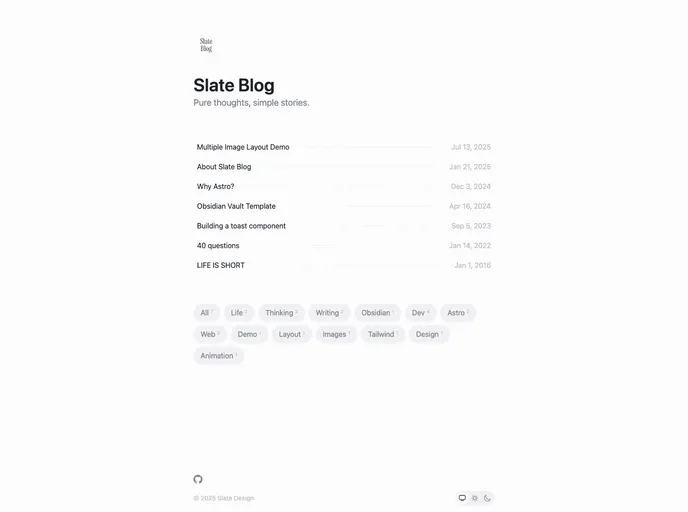


A minimal, elegant, and modern blog theme built with Astro.
Overview
The Slate blog theme is a beautifully minimalist design created for those who appreciate the elegance of simple, effective writing and sharing tools. With its focus on content, this theme provides a seamless experience for both writers and readers, ensuring that the words take center stage. Built on a modern framework, it promises to be fast, lightweight, and efficient, making it a great choice for users looking to streamline their blogging process.
What sets Slate apart is its compatibility with Obsidian, allowing users to effortlessly convert notes into published posts. The features of this theme cater to various needs of modern bloggers, whether you’re looking for responsive design or comprehensive SEO optimization.
Features
- Minimalist Design Theme: A clean, uncluttered aesthetic that highlights your content without distractions.
- Mobile-First Responsive Layout: Automatically adjusts to different screen sizes for an optimal reading experience on devices of all kinds.
- Light and Dark Mode Support: Easily switch between viewing modes to enhance user comfort during reading sessions.
- Quick Setup with Zero Configuration Required: Get started in no time with an easy installation process that requires minimal setup.
- Draft Mode with Local Preview: Preview your posts before publishing, ensuring your content looks just as intended.
- Built-In RSS Feed with Follow Authentication: Simplifies keeping your audience updated through automatic notifications.
- Integrated Algolia Search Functionality: Facilitates quick and powerful search capabilities for your readers to find content easily.
- Comprehensive SEO Optimization: Enhances your visibility on search engines, helping increase your audience reach.
- Astro
Astro is the all-in-one web framework designed for speed. Pull your content from anywhere and deploy everywhere, all powered by your favorite UI components and libraries.
- React
React is a widely used JavaScript library for building user interfaces and single-page applications. It follows a component-based architecture and uses a virtual DOM to efficiently update and render UI components
- Tailwind
Tailwind CSS is a utility-first CSS framework that provides pre-defined classes for building responsive and customizable user interfaces.
- Blog

Blog websites feature posts written by one or more authors, organized by categories and tags, with a section for comments and archives sorted by date or topic. Additional features may include search bar, social media sharing, subscription or RSS feed, about and contact pages, and visual content.
- Eslint

ESLint is a linter for JavaScript that analyzes code to detect and report on potential problems and errors, as well as enforce consistent code style and best practices, helping developers to write cleaner, more maintainable code.
- Typescript

TypeScript is a superset of JavaScript, providing optional static typing, classes, interfaces, and other features that help developers write more maintainable and scalable code. TypeScript's static typing system can catch errors at compile-time, making it easier to build and maintain large applications.