
Ngx Materialize
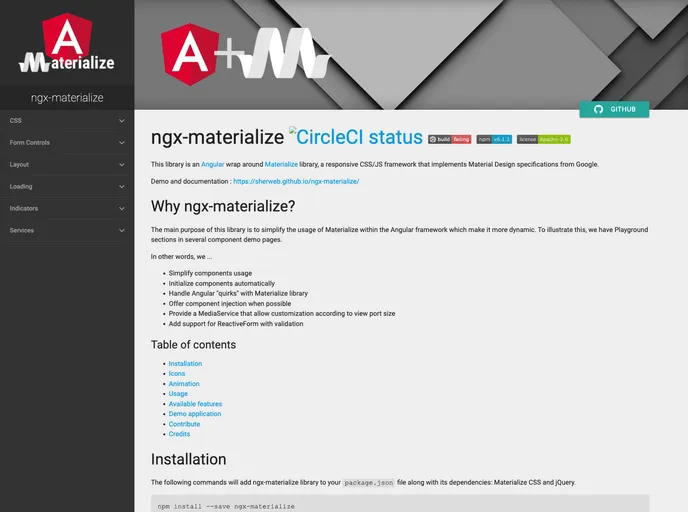

Angular wrap around Materialize library
Overview
The ngx-materialize library simplifies the usage of Materialize within the Angular framework, making it more dynamic. It offers features such as simplified components usage, automatic initialization of components, handling Angular "quirks" with Materialize library, component injection, a MediaService for customization based on viewport size, and support for ReactiveForm with validation.
Features
- Simplify components usage
- Initialize components automatically
- Handle Angular "quirks" with Materialize library
- Offer component injection when possible
- Provide a MediaService for customization based on viewport size
- Add support for ReactiveForm with validation
Summary
The ngx-materialize library simplifies the usage of Materialize within the Angular framework, providing a range of features such as simplified components usage, automatic initialization, handling Angular "quirks," component injection, customization based on viewport size, and support for ReactiveForm with validation. Installation is straightforward, and the library offers options for icons and animation. Overall, it is a useful tool for Angular developers working with Materialize.
- Angular
Angular is a TypeScript-based open-source framework by Google for building dynamic single-page applications and cross-platform mobile apps with MVC architecture and a rich set of features.
- Material Design

Material Design is a design system developed by Google that provides a set of guidelines, components, and tools for creating visually appealing and functional user interfaces. Material Design is designed to be flexible and customizable, making it a great choice for a wide range of applications and use cases.
- Typescript

TypeScript is a superset of JavaScript, providing optional static typing, classes, interfaces, and other features that help developers write more maintainable and scalable code. TypeScript's static typing system can catch errors at compile-time, making it easier to build and maintain large applications.