
React Native Boilerplate
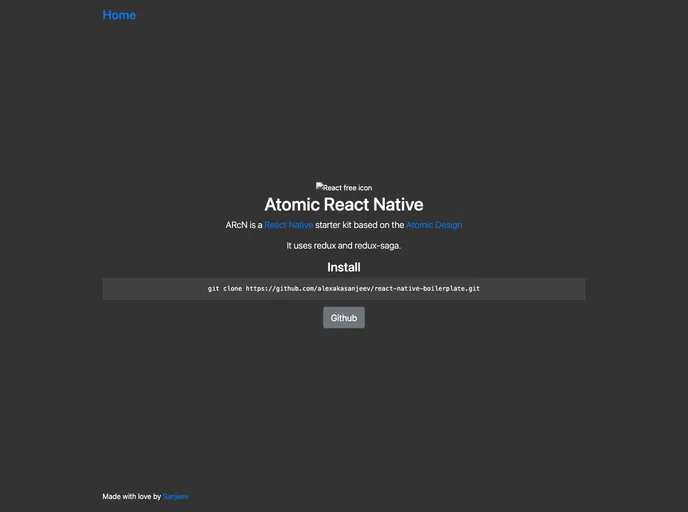


A Robust React Native boilerplate to kickstart your new app
Overview:
This project is a React Native boilerplate that provides an architecture optimized for building solid cross-platform mobile applications. It aims to simplify the process of setting up a new project by automating the installation of common packages and implementing best practices learned from experienced developers in the React Native community. The boilerplate separates the UI from the business logic, allowing for better organization and scalability. It also provides documentation and a storybook feature for easier development and testing.
Features:
- Architecture optimized for building cross-platform mobile applications
- Separation of concerns between UI and business logic
- Automation of project setup and installation of common packages
- Extensible to suit any workflow
- Documentation and explanation of project structure
- Storybook feature for visualizing and testing components
- Contributions welcome from the community
Summary:
This React Native boilerplate provides a structured and optimized architecture for building cross-platform mobile applications. It automates the setup process and includes common packages and best practices from the React Native community. With the separation of concerns between the UI and business logic, developers can easily organize and scale their projects. The documentation and storybook feature make development and testing more straightforward. Contributions are welcome, and the boilerplate is regularly updated to align with the latest React Native releases. The project is licensed under the MIT License.
- React
React is a widely used JavaScript library for building user interfaces and single-page applications. It follows a component-based architecture and uses a virtual DOM to efficiently update and render UI components
- React Native
React Native is a framework for building mobile applications using React and JavaScript. It enables developers to write once and deploy to multiple platforms, including iOS, Android, and the web, while providing a native app-like experience to users.
- Eslint

ESLint is a linter for JavaScript that analyzes code to detect and report on potential problems and errors, as well as enforce consistent code style and best practices, helping developers to write cleaner, more maintainable code.
- Redux
Redux is a state management library for JavaScript apps that provides a predictable and centralized way to manage application state. It enables developers to write actions and reducers that update the state in response to user interactions, server responses, and other events, and can be used with a variety of front-end frameworks and back-end technologies.