
Nextjs Firebase Auth
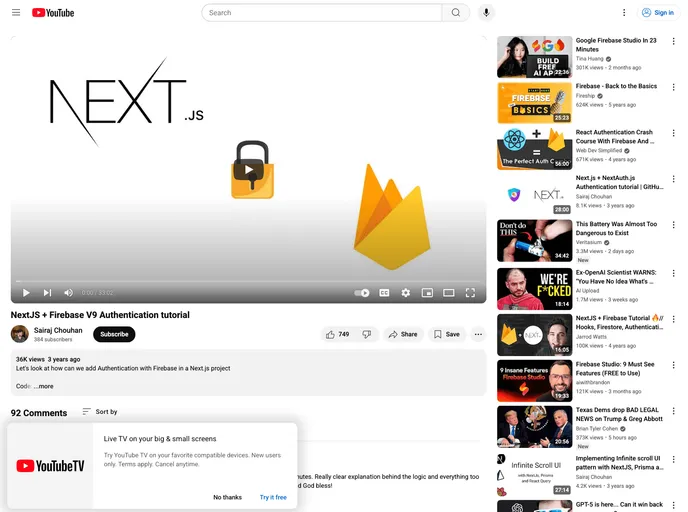


Authentication in Next.js with firebase
## Overview
Authentication is a crucial part of any web application, and integrating it seamlessly can often be challenging. Next.js, with its powerful server-side rendering capabilities, combined with Firebase's robust authentication features, offers a powerful solution for developers. The partnership between these two technologies not only simplifies the authentication process but also enhances the overall user experience.

Setting up authentication in Next.js with Firebase allows developers to leverage Firebase's extensive authentication methods, including email/password, phone authentication, and even social media login options. This setup ensures that users can log in easily while developers maintain control over session management and user data security.

## Features
- **Seamless Integration**: Next.js integrates smoothly with Firebase, allowing for easy setup of authentication features in your application.

- **Multiple Authentication Methods**: Firebase supports various authentication methods including email/password, phone authentication, as well as OAuth providers like Google, Facebook, and more.

- **Real-time Database**: Integrate real-time data management alongside user authentication, providing a cohesive and interactive experience.

- **Server-side Rendering**: Next.js's server-side rendering capabilities improve performance and SEO while handling authentication.

- **User Session Management**: Firebase Authentication includes tools to manage user sessions efficiently, maintaining user states across different pages.

- **Secure User Data**: Firebase offers robust security measures to protect user information, reassuring both developers and users regarding data safety.

- **Quick Setup**: The combination of Next.js and Firebase allows for easy and quick setup of authentication processes without extensive configurations.

- **Extensive Documentation**: Both Next.js and Firebase come with comprehensive documentation and community support, making it easier for developers to implement functionalities.
- Next.js
Next.js is a React-based web framework that enables server-side rendering, static site generation, and other powerful features for building modern web applications.
- React
React is a widely used JavaScript library for building user interfaces and single-page applications. It follows a component-based architecture and uses a virtual DOM to efficiently update and render UI components
- Bootstrap
Bootstrap is the most popular CSS Framework for developing responsive and mobile-first websites.
- Firebase
Firebase offers a comprehensive set of features, including real-time database, authentication, hosting, cloud functions, storage, and more. Firebase provides an easy-to-use interface and allows developers to focus on building features rather than managing infrastructure.
- Eslint

ESLint is a linter for JavaScript that analyzes code to detect and report on potential problems and errors, as well as enforce consistent code style and best practices, helping developers to write cleaner, more maintainable code.
- Typescript

TypeScript is a superset of JavaScript, providing optional static typing, classes, interfaces, and other features that help developers write more maintainable and scalable code. TypeScript's static typing system can catch errors at compile-time, making it easier to build and maintain large applications.