
Rollup Docs Cn
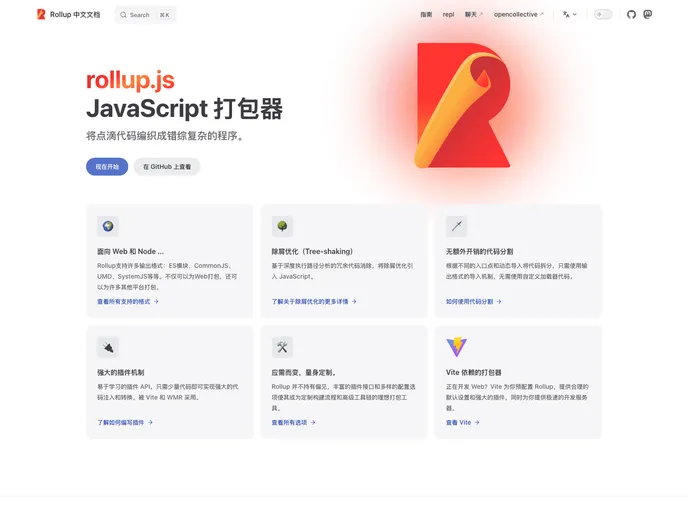



Rollup.js 中文文档 - Built with Vitepress
Overview
Rollup is an efficient and widely-used tool in the JavaScript ecosystem designed for bundling JavaScript files. This particular repository serves as a dedicated translation workspace for Rollup’s documentation in Chinese, designed to help Chinese speakers better understand and utilize this powerful bundler. Being a fork from the official Rollup repository, it is continuously maintained and updated, ensuring that users always have access to the latest information.
The initiative is backed by a community of contributors and sponsors who help support the ongoing development and improvement of the documentation. Their efforts make it easier for developers in the Chinese-speaking community to harness the full potential of Rollup.
Features
- Comprehensive Translations: The repository includes detailed Chinese translations of the official Rollup documentation, making it accessible to a broader audience.
- Community Contributions: Encourages contributions from users who wish to participate and improve the documentation, fostering an active community.
- Regular Updates: The documentation is kept up-to-date with the latest changes and features from the official Rollup repository to ensure relevance.
- Support from Sponsors: Backed by sponsors, which allows for further development and enhancement of the documentation resources.
- User-Friendly Guidelines: Clear contribution guidelines assist new contributors in submitting improvements effectively.
- MIT License: The project is available under the MIT license, promoting free use and modification by the community.
- Vite
Vite is a build tool that aims to provide a faster and leaner development experience for modern web projects
- Vitepress
VitePress is a static site generator designed for creating documentation websites. It offers a lightweight and fast development experience using Vue.js and Markdown, with features such as live-reload, theming, and customizable layout components.
- Vue
Vue.js is a lightweight and flexible JavaScript framework that allows developers to easily build dynamic and reactive user interfaces. Its intuitive syntax, modular architecture, and focus on performance make it a popular choice for modern web development.
- Eslint

ESLint is a linter for JavaScript that analyzes code to detect and report on potential problems and errors, as well as enforce consistent code style and best practices, helping developers to write cleaner, more maintainable code.
- Pinia

Pinia is the official state management library for Vue.js. It provides a simple and intuitive API with full TypeScript support, devtools integration, and modular design. Pinia replaces Vuex as the recommended state management solution for Vue 3.
- Rollup

RollupJS is a popular and efficient JavaScript module bundler that takes the code from multiple modules and packages them into a single optimized file, minimizing the overall size of the application and improving its performance.
- Typescript

TypeScript is a superset of JavaScript, providing optional static typing, classes, interfaces, and other features that help developers write more maintainable and scalable code. TypeScript's static typing system can catch errors at compile-time, making it easier to build and maintain large applications.