
Streaming Html5
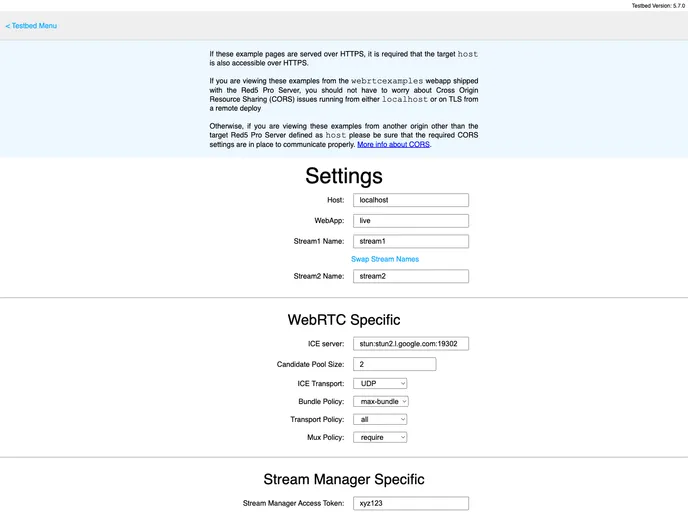

Testbed examples for Red5 Pro HTML SDK usage
Overview:
Red5 Pro's HTML Streaming Testbed serves as a practical platform for testing and referencing the capabilities of their WebRTC SDK. This tool facilitates both the publishing and subscribing of streams, enabling developers to experiment with different streaming scenarios using Red5 Pro's robust solutions. Whether you're working on mobile or desktop applications, this testbed allows for seamless integration with the Red5 Pro server, making it a vital resource for any developer looking to enhance their live streaming applications.
The flexibility of the Red5 Pro WebRTC SDK is underscored by its compatibility with various browsers, allowing for a more inclusive user experience. By leveraging different types of publishers and subscribers, users can optimize their streaming setup for speed and efficiency. This comprehensive set of features helps developers create a smooth and reliable streaming environment for their applications.
Features:
-
WebRTC Integration: Utilizes WebRTC for real-time streaming, enhancing the overall interactivity of applications.
-
HLS Support: Provides HLS streaming capabilities for browsers like Mobile and Desktop Safari, ensuring broader compatibility.
-
Fast Publisher Connections: The WHIPClient can establish a connection in approximately 1 second, making it ideal for quick broadcast sessions.
-
Flexible Subscriber Options: Offers multiple subscriber instances — WHEPClient, RTCSubscriber, and HLSSubscriber — catering to different streaming needs.
-
Latency Considerations: While the WHEPClient provides rapid connections, the HLSSubscriber may exhibit up to 6 seconds of latency, which is crucial for live broadcasts.
-
TLS and CORS Compliance: Notably, examples using WebRTC must be served over HTTPS, ensuring secure communications for remote deployments.
-
Simple Setup Requirements: Easily modify settings to connect to your server's IP address, streamlining initial configuration for developers.
-
Local and Remote Compatibility: Functions both locally and remotely, provided that the server setup meets specified requirements.
- HTML
HTML templates are pre-designed and pre-built web pages that can be customized and used as a basis for building websites. They often include common elements such as headers, footers, menus, and content sections, and can be easily edited using HTML and CSS to fit specific branding and content needs.
- Eslint

ESLint is a linter for JavaScript that analyzes code to detect and report on potential problems and errors, as well as enforce consistent code style and best practices, helping developers to write cleaner, more maintainable code.
- Gulp

Gulp.js is an old but popular site building tool that automates various repetitive development tasks in web development, such as compiling Sass, minifying JavaScript, and optimizing images.