
Flowbite Qwik
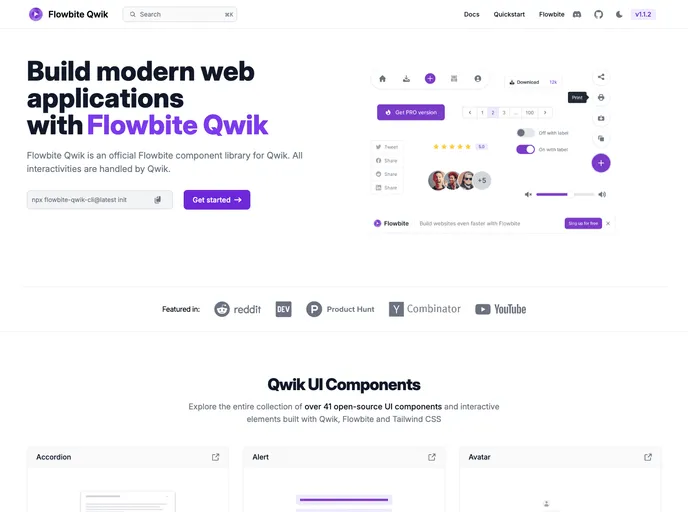



Official Qwik components built for Flowbite and Tailwind CSS
Overview
Flowbite-Qwik is an intriguing open-source collection of UI components built using the Qwik framework, enhanced with utility classes from Tailwind CSS. This toolkit serves as a robust starting point for developers looking to create sleek user interfaces and engaging websites while leveraging the benefits of Tailwind's utility-first approach.
With Flowbite-Qwik, the focus is not only on aesthetic appeal but also on functionality and seamless integration into existing projects. It provides an excellent opportunity for developers to kickstart their projects with pre-built components, allowing for quicker and more efficient development cycles.
Features
- Open Source: Flowbite-Qwik is completely open source, allowing developers to use, modify, and contribute to the project freely.
- Tailwind CSS Integration: Built upon Tailwind CSS, Flowbite-Qwik makes it easy to create responsive and visually appealing components without heavy lifting.
- Customizable Themes: You can easily customize themes by modifying the FlowbiteProvider settings, including default options for colors and toast positions.
- Multiple Installation Methods: Install Flowbite-Qwik through NPM or using its CLI, offering flexibility based on your project needs.
- Rich Component Library: Comes with a diverse set of UI components ready for use, covering various common design needs.
- Component Composables: Provides helpful hooks like useToasts and useDarkMode that simplify common development tasks.
- Easy Setup: Getting started is straightforward, requiring minimal configuration to get the components up and running in your application.
- Qwik
Qwik is an innovative Static Site Generator (SSG) that focuses on ultra-fast loading times by rendering pages on the server side and delivering optimized JavaScript to the client side. It leverages its unique Qwik framework to achieve rapid page rendering, making it a powerful choice for building performant static websites.
- Tailwind
Tailwind CSS is a utility-first CSS framework that provides pre-defined classes for building responsive and customizable user interfaces.
- Flowbite
Build websites even faster with components on top of Tailwind CSS. Start developing with an open-source library of over 600+ UI components, sections, and pages built with the utility classes from Tailwind CSS and designed in Figma.
- UI Kits & Components

A UI kit provides developers with a set of reusable components that can be easily integrated into a website or application. These components are pre-designed with consistent styling and functionality, allowing developers to save time and effort in the design and development process. UI kits can be either custom-built or third-party, and often include components for buttons, forms, typography, icons, and more.
- Typescript

TypeScript is a superset of JavaScript, providing optional static typing, classes, interfaces, and other features that help developers write more maintainable and scalable code. TypeScript's static typing system can catch errors at compile-time, making it easier to build and maintain large applications.