
Hugo Extended Docker
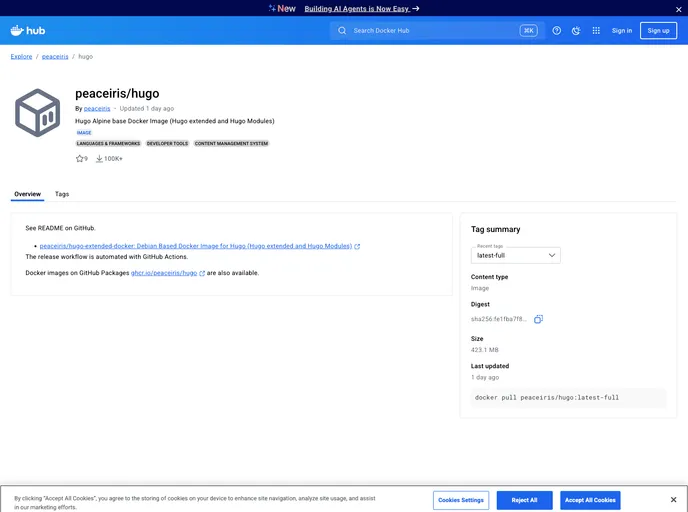

Debian Based Docker Images for Hugo (Hugo extended and Hugo Modules)
Overview
The peaceiris/hugo Docker image is an exciting solution for developers looking to streamline their Hugo development workflow. Built on a Debian-based foundation, this image supports both Hugo extended features and Hugo Modules, making it versatile for creating static sites. With a focus on efficiency and compatibility across various platforms, this Docker container is geared towards providing a seamless experience for users of all skill levels.
What's particularly impressive is the variety of image options available, catering to different project requirements. Whether you need a lightweight image or one that supports Node.js, peaceiris has you covered, allowing for effortless site setup and management.
Features
-
Multiple Image Variants: Choose from different image configurations—slim, modules, or full—allowing you to select the best size and capabilities for your project needs.
-
Compressed Size Options: The slim image weighs in at just 72.64 MB, while the full version is 378.96 MB, offering a range of choices based on your project’s requirements.
-
Hugo Modules Support: The image with modules includes Hugo’s additional capabilities for improved functionality, making site management easier and more robust.
-
Node.js Integration: The full image includes Node.js and npm, allowing for a complete development stack right out of the box.
-
Cross-Platform Compatibility: Supports various operating systems, including Linux (Ubuntu), macOS, and Windows, making it a flexible option for diverse development environments.
-
GitHub Actions Support: Easily integrate with GitHub Actions for automated workflows, enhancing your site's build and deployment process.
-
MIT License: The open-source nature under the MIT license ensures that users can freely use and modify the image based on their project needs.
- Hugo
Hugo is an open-source static site generator that features fast build times, flexible themes, support for multiple content formats, multilingual websites, live reloading, and an active community. It allows developers to easily create and deploy SEO-friendly and mobile-responsive websites.
- Docker

A website that uses Docker for containerization to streamline development, testing, and deployment workflows. This includes features such as containerization of dependencies, automated builds and deployments, and container orchestration to ensure scalability and availability.