
Palmetto Components
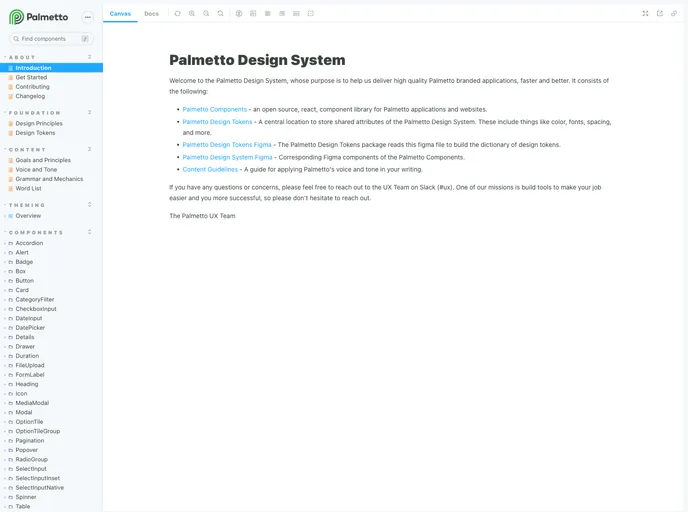


A React component library to power all Palmetto UI.
Overview
Palmetto Components is a React component library designed to streamline the development of user interfaces. This library offers a suite of reusable components, promoting a consistent look and feel across applications. It’s especially useful for developers looking to enhance their productivity by leveraging pre-built elements that can be easily integrated into projects.
Getting started with Palmetto Components is straightforward. With a simple installation command and a quick setup of global CSS, developers can begin utilizing the versatile components in their applications. The commitment to community contributions and detailed documentation makes it accessible for developers at any level of expertise.
Features
-
Easy Installation: Simply run
yarn add @palmetto/palmetto-componentsto add the library to your project in no time. -
Global CSS Integration: Import a global reset CSS to ensure a uniform appearance for all components, enhancing the overall aesthetics of your application.
-
Comprehensive Documentation: Access detailed documentation to guide you through usage and help you navigate the library with ease.
-
Community Contribution: The project encourages contributions, making it a collaborative environment where developers can suggest features, report issues, and improve the library together.
-
Active Issue Tracking: A structured approach to raising issues ensures that bugs and queries are efficiently managed and resolved.
-
MIT License: The library is open source and licensed under the MIT license, promoting flexibility and wide usage among developers.
Palmetto Components provides a solid foundation for developers seeking to create cohesive and well-designed interfaces with minimal effort.
- React
React is a widely used JavaScript library for building user interfaces and single-page applications. It follows a component-based architecture and uses a virtual DOM to efficiently update and render UI components
- SCSS
SCSS is a preprocessor scripting language that extends the capabilities of CSS by adding features such as variables, nesting, and mixins. It allows developers to write more efficient and maintainable CSS code, and helps to streamline the development process by reducing repetition and increasing reusability.
- Eslint

ESLint is a linter for JavaScript that analyzes code to detect and report on potential problems and errors, as well as enforce consistent code style and best practices, helping developers to write cleaner, more maintainable code.
- MDX

MDX is a format that allows developers to write JSX within Markdown documents, combining the power of React with the simplicity of Markdown. This allows for the creation of dynamic and interactive content that can be easily shared and consumed across different platforms and devices.
- Postcss

PostCSS is a popular open-source tool that enables web developers to transform CSS styles with JavaScript plugins. It allows for efficient processing of CSS styles, from applying vendor prefixes to improving browser compatibility, ultimately resulting in cleaner, faster, and more maintainable code.
- Stylelint
Stylelint is a modern linter for CSS that helps you avoid errors and enforce consistent styling conventions. It provides rules for detecting errors and warnings, and can be configured to match your specific project's requirements.
- Typescript

TypeScript is a superset of JavaScript, providing optional static typing, classes, interfaces, and other features that help developers write more maintainable and scalable code. TypeScript's static typing system can catch errors at compile-time, making it easier to build and maintain large applications.
- Webpack

Webpack is a popular open-source module bundler for JavaScript applications that bundles and optimizes the code and its dependencies for production-ready deployment. It can also be used to transform other types of assets such as CSS, images, and fonts.
- Formik

Formik is a popular form library for React that helps with form state management, validation, and submission handling. It provides a declarative approach to building forms with support for complex validation scenarios and easy integration with validation libraries like Yup.