
Realtime Next
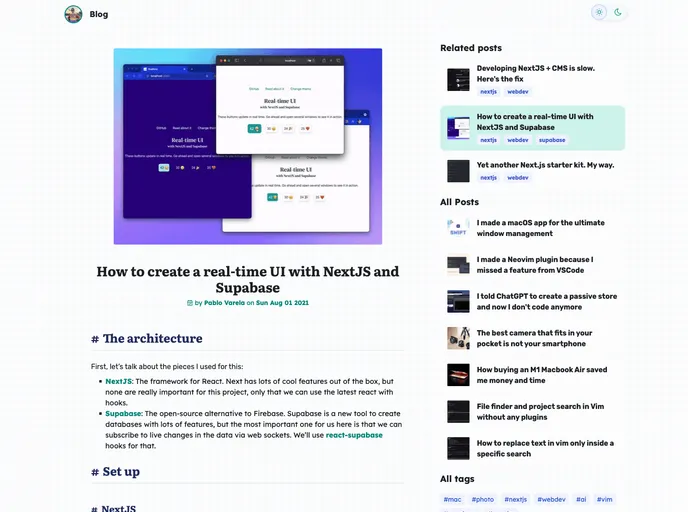


How to create a real-time UI with NextJS and Supabase
Overview
Realtime Next is an innovative guide that walks you through creating a real-time user interface using NextJS and Supabase. This resource is designed for developers looking to enhance their skills in building dynamic web applications that can deliver instant updates to users. With the rise of interactive applications, mastering these technologies becomes increasingly essential for creating engaging digital experiences.
This comprehensive approach not only covers the foundational concepts of NextJS and Supabase but also dives into practical implementations. Whether you're a beginner or looking to refine your existing knowledge, Realtime Next offers valuable insights and step-by-step instructions to help you build your own real-time applications effortlessly.
Features
- Step-by-Step Instructions: Clear guidance through each phase of the development process, making it easy to follow along.
- Real-Time Capabilities: Learn how to leverage Supabase for delivering live updates to your users without requiring page refreshes.
- NextJS Integration: Discover how to seamlessly integrate NextJS with Supabase to create a fluid and responsive user interface.
- Code Samples: Access ready-to-use code snippets that enhance learning and speed up your development process.
- Best Practices: Gain insights into industry best practices for building scalable and maintainable applications.
- Community Support: Engage with a community of developers who can offer assistance and share experiences.
- Responsive Design Tips: Tips on ensuring your application looks great on devices of all sizes, enhancing user experience.
- Next.js
Next.js is a React-based web framework that enables server-side rendering, static site generation, and other powerful features for building modern web applications.
- React
React is a widely used JavaScript library for building user interfaces and single-page applications. It follows a component-based architecture and uses a virtual DOM to efficiently update and render UI components
- Tailwind
Tailwind CSS is a utility-first CSS framework that provides pre-defined classes for building responsive and customizable user interfaces.
- Supabase
Supabase is an open source Firebase alternative. Start your project with a Postgres database, Authentication, instant APIs, Edge Functions, Realtime subscriptions, and Storage.
- Fullstack

A fullstack boilerplate provides a starter application that includes both frontend and backend. It should include database, auth, payments, user roles and other backend services to build a fully featured saas or webapps.
- Eslint

ESLint is a linter for JavaScript that analyzes code to detect and report on potential problems and errors, as well as enforce consistent code style and best practices, helping developers to write cleaner, more maintainable code.
- Postcss

PostCSS is a popular open-source tool that enables web developers to transform CSS styles with JavaScript plugins. It allows for efficient processing of CSS styles, from applying vendor prefixes to improving browser compatibility, ultimately resulting in cleaner, faster, and more maintainable code.
- Typescript

TypeScript is a superset of JavaScript, providing optional static typing, classes, interfaces, and other features that help developers write more maintainable and scalable code. TypeScript's static typing system can catch errors at compile-time, making it easier to build and maintain large applications.
- Vercel

Vercel offers built-in support for deploying and hosting Next.js applications, making it a popular choice among Next.js developers.