
Nextjs Blog Tailwind Starter
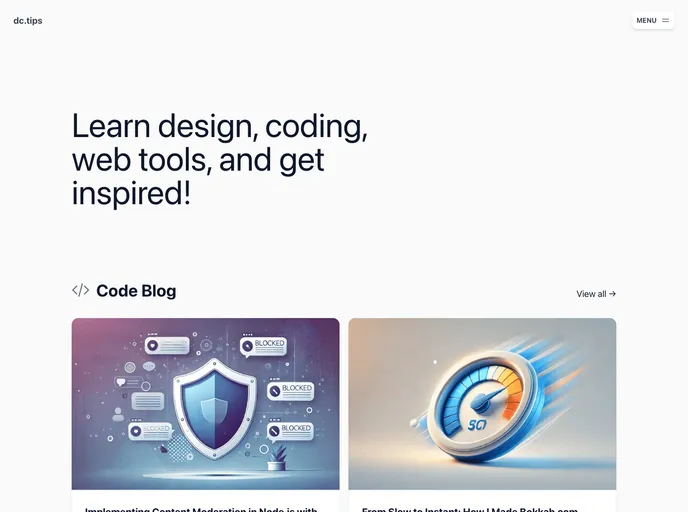


Next.js 14 Blog Starter with Tailwind CSS, Contentlayer, & Decap CMS
Overview
The Next.js 14 Blog Starter is an impressive open-source template designed to simplify the process of launching a modern blog. Built with top-notch technologies such as Next.js 14, Tailwind CSS, Contentlayer, and Decap CMS, this starter kit enables users to quickly create a blog that is both functional and visually appealing. It stands out for its ability to support MDX, providing a flexible structure for integrating JSX components into your content, making it perfect for developers and bloggers alike.
With pre-configured categories like Code Blog, Inspiration, Podcasts, and Tools, the setup is user-friendly, allowing for easy content management. Furthermore, the inclusion of dark/light mode, optimized images, and a clean CMS interface makes it an excellent choice for those looking to create a polished and modern blogging experience.
Features
- Next.js 14: Utilizes a fast, modern React framework, ensuring your web applications are production-ready and efficient.
- Tailwind CSS: Embraces a utility-first CSS approach for rapid UI development, allowing customization without breaking a sweat.
- MDX Support: Write engaging blog posts using Markdown enriched with JSX components, enhancing content presentation.
- Contentlayer: Simplifies content management by treating files as data, making organization and retrieval straightforward.
- Decap CMS: Provides an intuitive interface for managing posts, making content updates seamless and hassle-free.
- Categories: Comes pre-configured with sections tailored for various content types, helping organize your blog effectively.
- Optimized Images: Features the <ExportedImage /> component for enhanced image handling, improving quality and loading performance.
- Dark/Light Mode: Adapts to user's operating system settings, providing a customizable viewing experience whether day or night.
- Next.js
Next.js is a React-based web framework that enables server-side rendering, static site generation, and other powerful features for building modern web applications.
- React
React is a widely used JavaScript library for building user interfaces and single-page applications. It follows a component-based architecture and uses a virtual DOM to efficiently update and render UI components
- Tailwind
Tailwind CSS is a utility-first CSS framework that provides pre-defined classes for building responsive and customizable user interfaces.
- Contentlayer

Contentlayer is an open-source platform for building dynamic, data-driven websites and applications using markdown files as the content source. It features an intuitive API, flexible content modeling, and easy integration with popular frontend frameworks and tools.
- Eslint

ESLint is a linter for JavaScript that analyzes code to detect and report on potential problems and errors, as well as enforce consistent code style and best practices, helping developers to write cleaner, more maintainable code.
- Framer Motion

Alpine.js is a lightweight JavaScript framework that simplifies the process of creating dynamic, reactive user interfaces on the web. It uses a declarative syntax that offers a higher level of abstraction compared to vanilla JavaScript, while being more performant and easier to use than jQuery.
- Postcss

PostCSS is a popular open-source tool that enables web developers to transform CSS styles with JavaScript plugins. It allows for efficient processing of CSS styles, from applying vendor prefixes to improving browser compatibility, ultimately resulting in cleaner, faster, and more maintainable code.
- Prism JS

PrismJS is an open-source, lightweight, and extensible syntax highlighting library that supports a wide range of programming languages and markup formats.
- Typescript

TypeScript is a superset of JavaScript, providing optional static typing, classes, interfaces, and other features that help developers write more maintainable and scalable code. TypeScript's static typing system can catch errors at compile-time, making it easier to build and maintain large applications.