
Django Swappable Models
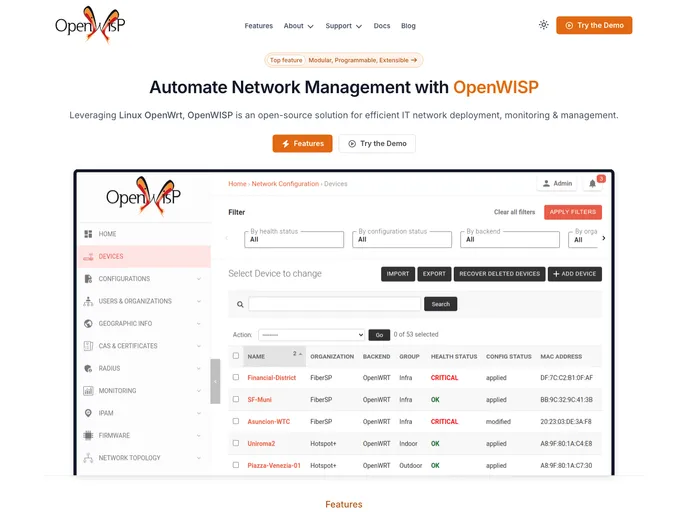

Swapper - The unofficial Django swappable models API. Maintained by the OpenWISP project.
Overview
Swapper is an innovative tool for Django developers, specifically designed to simplify the use of swappable models. Traditionally utilized for the auth.User model, Swapper extends this capability to any model within your reusable Django apps. This flexibility allows developers to create complex model structures while enabling users to customize and add fields to these models without compromising functionality. With Swapper, subclasses can seamlessly integrate into existing frameworks, enhancing software reusability—a core principle of modern app development.
The importance of Swapper lies in its ability to manage dependencies and model loading, ensuring that developers can focus on building features without worrying about the intricacies of model relationships. This makes it an essential tool for anyone looking to create robust and adaptable Django applications.
Features
-
Swappable Models: Easily implement swappable models in your project with a simple API that allows for customization and extension.
-
Dependency Management: Facilitates effective management of foreign key references and dependency ordering in your migration scripts for cleaner database structure.
-
Abstract Base Classes: Define abstract base classes for models that can be extended by end users, promoting flexibility and customization.
-
User-Friendly Integration: Provides a straightforward process for integrating Swapper into your existing codebase, keeping the focus on functionality rather than configuration.
-
Library Author Focused: Designed primarily for library authors, Swapper ensures that end users can operate without needing an in-depth understanding of the underlying mechanics.
-
Real-World Applications: Extensively used in various OpenWISP packages, showcasing its reliability and effectiveness in professional environments.
-
Error Prevention: Prevents integration errors in reusable apps by ensuring that swapper is correctly added to dependencies, thereby protecting users from potential issues.
-
Migration Scripts Compatibility: Simplifies the use of migration scripts, streamlining changes needed for model updates while maintaining user integrity.
- Django
Django is a high-level Python web framework that encourages rapid development and clean, pragmatic design. It follows the model-view-controller (MVC) architectural pattern, providing an extensive set of built-in tools and conventions to streamline the creation of robust and scalable web applications.