
Open UI
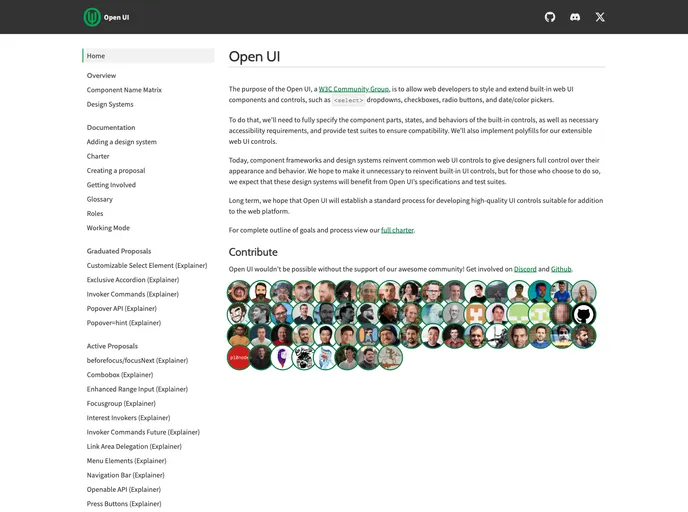
Maintain an open standard for UI and promote its adherence and adoption.
Overview:
The development of UI controls for web browsers has been a pivotal aspect of creating interactive and engaging websites since the inception of HTML. As web technology has evolved, the need for more advanced and flexible form controls has grown, demanding a shift from using outdated plugins and frameworks to a more unified solution. The Open UI Charter aims to address these challenges by reimagining the possibilities of user interface controls within the capabilities of HTML itself.
The project's goal is to create modern and accessible user interface controls that can meet the dynamic needs of today’s web developers and designers. By codifying popular interaction patterns directly into HTML, Open UI seeks to eliminate the dependency on cumbersome third-party solutions and promote a more seamless, consistent, and user-centric approach to web design.
Features:
-
Modern UI Controls: Introduces a new set of standardized UI controls that enhance user engagement and interactivity without relying on external plugins.
-
Accessibility Focus: Ensures that all new controls are designed with accessibility in mind, making web applications usable for all individuals, including those with disabilities.
-
Robust Browser Integration: Designed to work seamlessly across different browsers and devices, allowing for a consistent experience regardless of environment.
-
Native HTML Implementation: By integrating these controls directly into HTML, developers can create forms and interfaces without additional libraries or frameworks.
-
Improved Performance: Reduces the need for heavy JavaScript frameworks, thereby optimizing page load times and overall performance.
-
Security Enhancements: Focuses on minimizing vulnerabilities often associated with custom-built UI solutions by relying on vetted browser implementations.
-
Flexible Interaction Patterns: Supports a range of interaction patterns that meet the demands of modern web applications, from simple inputs to complex data collection forms.
-
Future-Proof Development: Aims to evolve alongside web standards, ensuring that developers can build applications that remain relevant for years to come.
- Web Components

Web components provide a way to create reusable, encapsulated UI components using standard web technologies such as HTML, CSS, and JavaScript. They allow developers to create complex UI components that can be easily shared across multiple projects and frameworks. Web components are built using four main specifications: Custom Elements, Shadow DOM, HTML Templates, and ES Modules.