
Conote Community
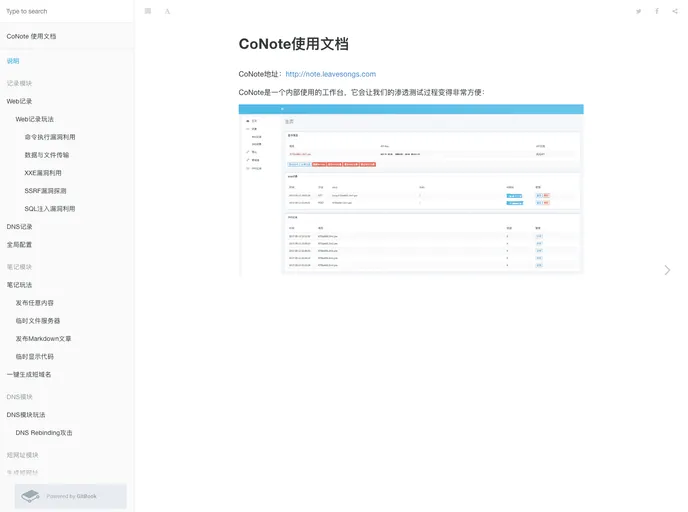

Conote 综合安全测试平台社区版。
Overview
CoNote is a versatile security testing platform designed for internal use, launched in December 2021 as a community edition. This platform streamlines the security testing process, making it easy for users to manage and conduct tests effectively in a secure environment. With a user-friendly interface and robust features, CoNote serves as a powerful tool for security professionals looking to enhance their testing capabilities.
The platform allows users to configure various aspects of their testing environment, from DNS settings to third-party login integration, ensuring comprehensive control over their security assessments. With a focus on usability and flexibility, CoNote has quickly gained attention in the tech community.
Features
-
Multi-domain Support: CoNote allows users to set up a primary domain and individual subdomains for logging and note management, facilitating organized and efficient access.
-
Custom DNS Configuration: Users can configure custom DNS records to test specific vulnerabilities, such as Rebind attacks, providing a highly tailored testing environment.
-
DNS Server Integration: CoNote can act as a DNS server, ensuring that DNS logs are effectively recorded while managing domain name resolutions seamlessly.
-
Short Domain Registration: The platform supports the registration of short domain names, simplifying access and management while integrating seamlessly with existing configurations.
-
Third-party Login Support: CoNote enables users to integrate their OAuth platforms easily, allowing for flexible authentication options without extensive adjustments in code.
-
Docker Support: Users can deploy CoNote using Docker, providing a containerized solution that enhances portability and can limit directory sizes for better resource management.
-
SMTP Server Setup: The platform allows users to configure an SMTP server for email functionalities, enhancing testing capabilities and providing direct communication avenues.
-
Sandboxing with gVisor: CoNote utilizes gVisor for added security by controlling the environment in which containers run, ensuring that testing activities do not compromise system integrity.
- Django
Django is a high-level Python web framework that encourages rapid development and clean, pragmatic design. It follows the model-view-controller (MVC) architectural pattern, providing an extensive set of built-in tools and conventions to streamline the creation of robust and scalable web applications.