
Nextjsghostcms
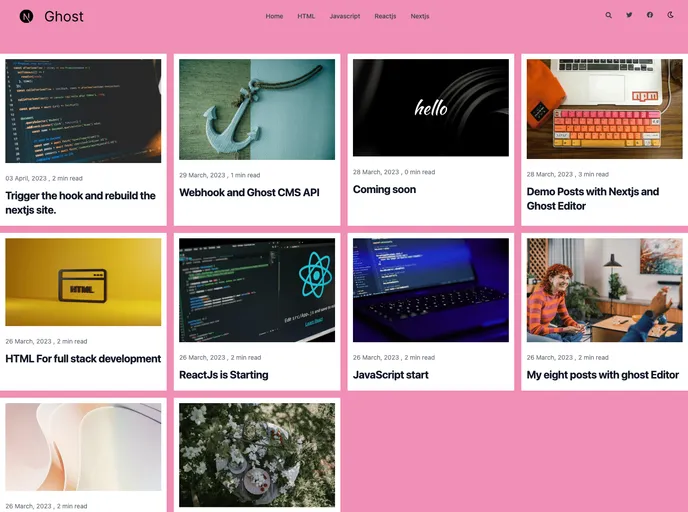


Combine the Nextjs and Ghost CMS API
Overview:
Setting up a blog with Next.js 13 and Ghost CMS is an innovative way to combine modern web development practices with a powerful content management system. The integration of static site generation and a headless CMS allows for a seamless and efficient blogging experience. This combination not only enhances performance but also simplifies the process of managing and deploying content for your site.
The setup process involves some basic steps, including cloning a repository and configuring environment variables to ensure that everything functions smoothly. Despite the project's current limitations with TypeScript, it serves as a solid foundation for building a static site blog.
Features:
- Easy Setup: Quickly clone the repository using the
git clonecommand to get started in no time. - Environment Variable Configuration: Requires setting up an environment variable in your Next.js app for proper functionality.
- Static Site Generation: Leverage the power of Next.js to build a static site blog that loads quickly and efficiently.
- Development Server: Test your setup conveniently by accessing
http://localhost:3000in your browser. - Headless CMS Integration: Utilize Ghost CMS for managing your content without the need for complex backend setups.
- No TypeScript Support: Currently, the project does not support TypeScript, which simplifies the initial setup for developers unfamiliar with it.
- Next.js
Next.js is a React-based web framework that enables server-side rendering, static site generation, and other powerful features for building modern web applications.
- React
React is a widely used JavaScript library for building user interfaces and single-page applications. It follows a component-based architecture and uses a virtual DOM to efficiently update and render UI components
- Tailwind
Tailwind CSS is a utility-first CSS framework that provides pre-defined classes for building responsive and customizable user interfaces.
- Ghost
Ghost is an open-source blogging platform designed to simplify the process of creating and publishing online content, with a focus on minimalism, speed, and flexibility.
- Eslint

ESLint is a linter for JavaScript that analyzes code to detect and report on potential problems and errors, as well as enforce consistent code style and best practices, helping developers to write cleaner, more maintainable code.
- Postcss

PostCSS is a popular open-source tool that enables web developers to transform CSS styles with JavaScript plugins. It allows for efficient processing of CSS styles, from applying vendor prefixes to improving browser compatibility, ultimately resulting in cleaner, faster, and more maintainable code.
- Typescript

TypeScript is a superset of JavaScript, providing optional static typing, classes, interfaces, and other features that help developers write more maintainable and scalable code. TypeScript's static typing system can catch errors at compile-time, making it easier to build and maintain large applications.