
V3.ocaml.org Rescript
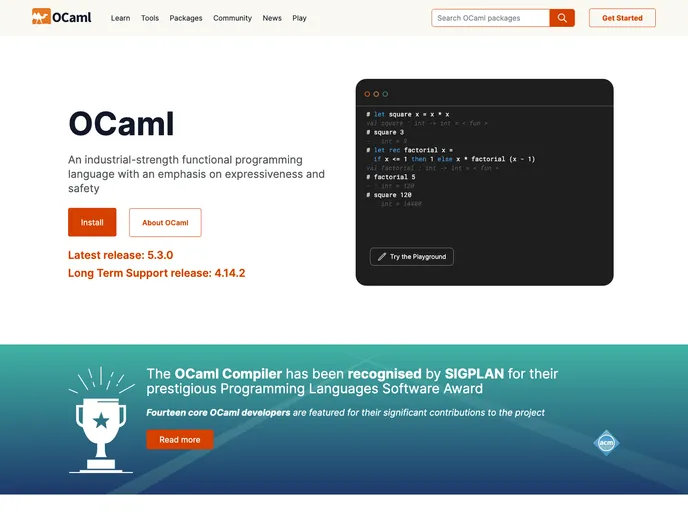


The next implementation of ocaml.org, built on OCaml, ReScript, NextJS, and Tailwind.
Overview
The new v3 upgrade of the ocaml.org site is set to bring a significant transformation to the OCaml ecosystem. Currently in development and aimed for a grand unveiling at the OCaml Workshop 2021, this upgraded site promises to modernize the interface and functionality, enriching the user experience for developers and enthusiasts alike. With its combination of documentation and package management, v3 represents the first major overhaul since v2 was launched back in 2012, making it an exciting advancement for the community.
As developers increasingly seek more integrated and user-friendly tools, v3 aims to provide exactly that. By updating both the look and feel of the site while ensuring robust back-end processes, it positions itself as a vital resource for OCaml users. This new infrastructure not only streamlines the process of accessing documentation but also enhances editorial contributions from the community, creating a more inclusive and resource-rich platform.
Features
-
Integrated Documentation and Package Management: v3 will seamlessly unify package management with a comprehensive documentation source, housing information on over 14,000 opam packages.
-
Responsive and Accessible Design: The redesign prioritizes modern web-design principles, ensuring the site is easy to navigate and accessible across various devices, especially mobile.
-
Separation of Data Editing from HTML/CSS Generation: This innovative approach keeps a structured data store to clearly separate content management from website presentation, enhancing efficiency.
-
Original Content Publishing: Unlike its predecessor, v3 will feature original content directly from the community, including interviews, news stories, and media from past conferences.
-
Advanced Data Automation: Utilizing ReScript/OCaml and Ocurrent, the site will automate data pipelines to keep content fresh and up-to-date.
-
Community-Driven Development: A dedicated team of developers and contributors are collaborating on this project, supported by a steering committee that oversees major decisions, ensuring community representation.
-
Multi-repository Structure: The development involves four key repositories, promoting organized collaboration and resource sharing throughout the process.
- Next.js
Next.js is a React-based web framework that enables server-side rendering, static site generation, and other powerful features for building modern web applications.
- React
React is a widely used JavaScript library for building user interfaces and single-page applications. It follows a component-based architecture and uses a virtual DOM to efficiently update and render UI components
- Tailwind
Tailwind CSS is a utility-first CSS framework that provides pre-defined classes for building responsive and customizable user interfaces.
- Postcss

PostCSS is a popular open-source tool that enables web developers to transform CSS styles with JavaScript plugins. It allows for efficient processing of CSS styles, from applying vendor prefixes to improving browser compatibility, ultimately resulting in cleaner, faster, and more maintainable code.