
Starter
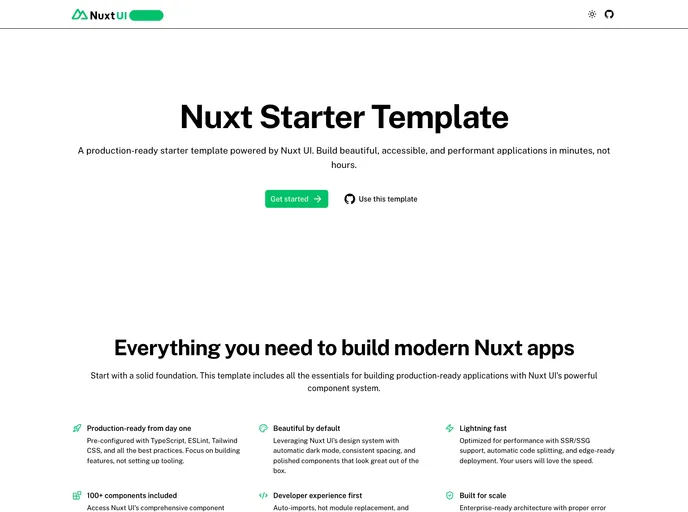


Nuxt Starter Template for Nuxt UI.
Overview
The Nuxt Starter Template is a powerful tool designed to help developers get up and running with Nuxt UI rapidly. It streamlines the setup process, allowing you to focus more on creating exceptional applications rather than dealing with complex configurations. Whether you're a seasoned developer or just starting, this template provides a solid foundation for building with the Vue framework.
With built-in support for deployment on platforms like Vercel and a straightforward setup for a development server, the Nuxt Starter Template ensures a smooth development experience. This template not only accelerates the initial stages of development but also provides comprehensive documentation to guide users through the process.
Features
- Quick Start: Jump right into development with a ready-to-use template that minimizes setup time.
- Development Server: Easily start your server on http://localhost:3000 for local development and testing.
- Production Ready: Build your application for production with a simple command, ensuring you're deploying an optimized app.
- Local Preview: Preview your production build locally before deploying to catch any potential issues.
- Deployment Support: Seamlessly deploy your application using Vercel with clear instructions provided in the documentation.
- Comprehensive Documentation: Access detailed documentation to help navigate through setup and deployment processes.
- User-Friendly Interface: Designed with a focus on usability, making it accessible for developers of all skill levels.
- Nuxt
nuxt.js is a lightweight and flexible JavaScript framework that allows developers to easily build dynamic and reactive user interfaces. Its intuitive syntax, modular architecture, and focus on performance make it a popular choice for modern web development.
- Vue
Vue.js is a lightweight and flexible JavaScript framework that allows developers to easily build dynamic and reactive user interfaces. Its intuitive syntax, modular architecture, and focus on performance make it a popular choice for modern web development.
- Templates & Themes

A template or theme refers to a pre-designed layout or structure that provides a basic framework for building a specific type of application or website. It typically includes good design, placeholder content and functional features, allowing developers to customize and fill in the details according to their specific needs.
- Eslint

ESLint is a linter for JavaScript that analyzes code to detect and report on potential problems and errors, as well as enforce consistent code style and best practices, helping developers to write cleaner, more maintainable code.
- Typescript

TypeScript is a superset of JavaScript, providing optional static typing, classes, interfaces, and other features that help developers write more maintainable and scalable code. TypeScript's static typing system can catch errors at compile-time, making it easier to build and maintain large applications.