
Gridsome Starter Articles
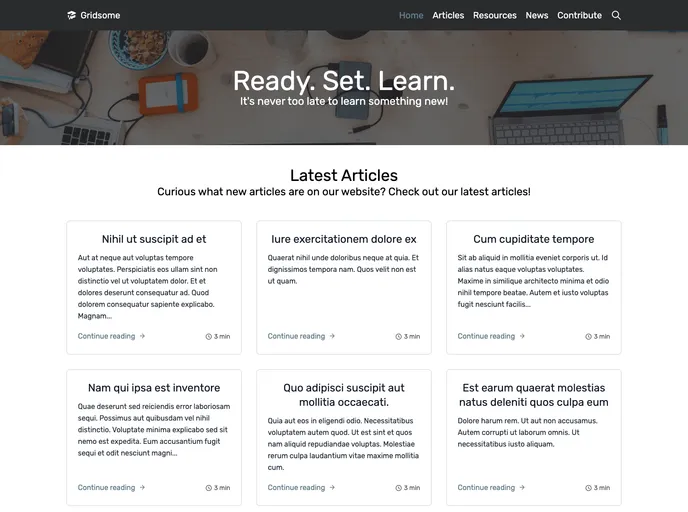



Gridsome starter template built with bootstrap
Overview
The Gridsome Articles Starter is a fantastic solution for anyone looking to create a blog or tutorial site using the Gridsome framework. This starter kit is well-structured to cater to writers and developers alike, allowing for a seamless creation process while providing a robust feature set to enhance content delivery. With its integration of popular styling frameworks like Bootstrap and Tailwind CSS, users can not only enjoy an efficient coding experience but also have access to modern design capabilities.
Whether you're building a personal blog, tutorial site, or resource hub, this starter kit serves as an excellent foundation. It facilitates rapid development and ensures your content stands out thanks to its responsive design and user-friendly features.
Features
- Gridsome & Bootstrap Integration: Combines the powerful capabilities of Gridsome with Bootstrap for responsive web design.
- SCSS Support: Utilizes SCSS for easier styling, allowing for variables and nesting for a cleaner codebase.
- Markdown Support: Easy content creation with Markdown, making it simple to format articles and tutorials.
- Full-text Search: Implements Fuse.js for quick and efficient content search, enhancing user navigation.
- Related Posts Feature: Automatically displays related articles to keep readers engaged and encourage further exploration.
- Pagination: Offers a clean pagination system, ensuring readers can easily navigate through multiple pages of content.
- Filterable Records: Provides a template for resources that users can filter, streamlining content discovery.
- Plugin Ecosystem: Leverages Gridsome’s extensive plugin support, including functionality for code highlighting and sitemap generation, ensuring a comprehensive site setup.
- Gridsome
Gridsome is a Vue.js-based static site generator that makes it easy to build fast and flexible websites and applications by leveraging modern web technologies like GraphQL, Webpack, and hot reloading
- Vue
Vue.js is a lightweight and flexible JavaScript framework that allows developers to easily build dynamic and reactive user interfaces. Its intuitive syntax, modular architecture, and focus on performance make it a popular choice for modern web development.
- Bootstrap
Bootstrap is the most popular CSS Framework for developing responsive and mobile-first websites.
- SCSS
SCSS is a preprocessor scripting language that extends the capabilities of CSS by adding features such as variables, nesting, and mixins. It allows developers to write more efficient and maintainable CSS code, and helps to streamline the development process by reducing repetition and increasing reusability.
- Blog

Blog websites feature posts written by one or more authors, organized by categories and tags, with a section for comments and archives sorted by date or topic. Additional features may include search bar, social media sharing, subscription or RSS feed, about and contact pages, and visual content.
- Eslint

ESLint is a linter for JavaScript that analyzes code to detect and report on potential problems and errors, as well as enforce consistent code style and best practices, helping developers to write cleaner, more maintainable code.