
Tailwindyt


Overview
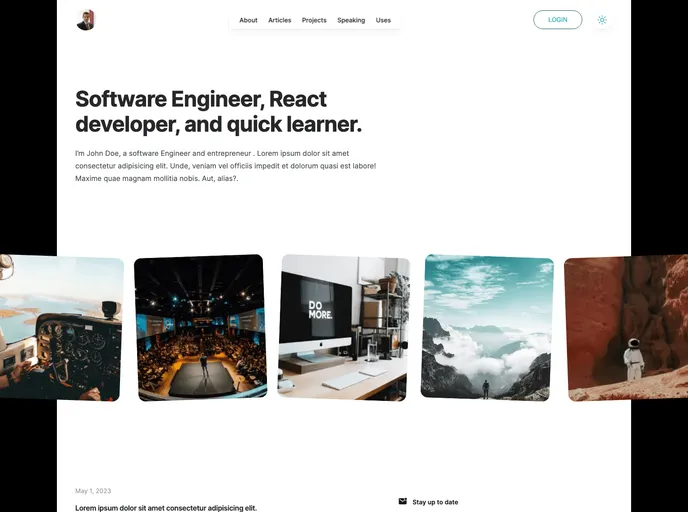
Next.js is a powerful framework for building server-rendered React applications. This particular project, which is initialized with create-next-app, offers a streamlined development experience, allowing developers to focus on crafting their applications without extensive setup. Whether you're a beginner or an experienced developer, setting up and running your Next.js project is refreshingly straightforward.
As you dive into building your application, you'll find that Next.js has a range of features designed to enhance performance, ease of use, and overall efficiency. This project takes full advantage of those qualities, providing a solid foundation for anyone looking to create dynamic web applications.
Features
-
Easy Startup: Launch your development server with a simple command, and see your application live in your browser at http://localhost:3000.
-
Live Editing: Modify the
app/page.tsxfile and watch as changes are reflected in real-time, making development fast and responsive. -
Automatic Font Optimization: Utilizes
next/fontto seamlessly load and optimize the Inter font, enhancing the visual appeal of your application without added complication. -
Comprehensive Documentation: Access a wealth of resources, including the Next.js Documentation and interactive tutorials, to deepen your understanding and skill set in using this powerful framework.
-
Community Engagement: Contribute to the Next.js GitHub repository and be part of a vibrant community, sharing feedback and insights that help improve the framework.
-
Streamlined Deployment: Deploy your Next.js app effortlessly using the Vercel platform, which is tailor-made for Next.js applications.
- Next.js
Next.js is a React-based web framework that enables server-side rendering, static site generation, and other powerful features for building modern web applications.
- React
React is a widely used JavaScript library for building user interfaces and single-page applications. It follows a component-based architecture and uses a virtual DOM to efficiently update and render UI components
- Tailwind
Tailwind CSS is a utility-first CSS framework that provides pre-defined classes for building responsive and customizable user interfaces.
- Headless UI
Headless UI is a set of completely unstyled, fully accessible UI components for React, Vue, and Alpine.js that empower developers to build their own fully accessible custom UI components. Headless UI allows developers to focus on building accessible and highly functional user interfaces, without the need to worry about styling or layout.
- Eslint

ESLint is a linter for JavaScript that analyzes code to detect and report on potential problems and errors, as well as enforce consistent code style and best practices, helping developers to write cleaner, more maintainable code.
- MDX

MDX is a format that allows developers to write JSX within Markdown documents, combining the power of React with the simplicity of Markdown. This allows for the creation of dynamic and interactive content that can be easily shared and consumed across different platforms and devices.
- Postcss

PostCSS is a popular open-source tool that enables web developers to transform CSS styles with JavaScript plugins. It allows for efficient processing of CSS styles, from applying vendor prefixes to improving browser compatibility, ultimately resulting in cleaner, faster, and more maintainable code.
- Typescript

TypeScript is a superset of JavaScript, providing optional static typing, classes, interfaces, and other features that help developers write more maintainable and scalable code. TypeScript's static typing system can catch errors at compile-time, making it easier to build and maintain large applications.