
Lowkey Hugo Theme
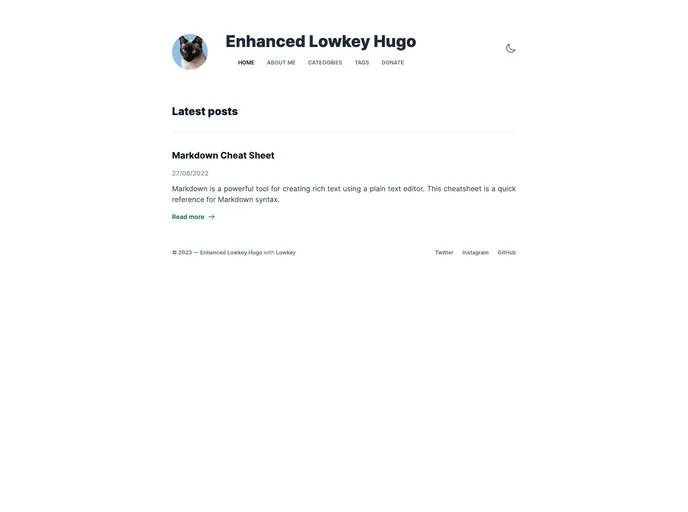
A Simple & Humble Hugo Themes
Overview
Lowkey Hugo theme is a simple and modern theme inspired by Adam Wathan's Blog. It utilizes Tailwind CSS, making it easy to customize and ensuring a clean, responsive design. The theme offers a minimalistic and streamlined layout, prioritizing readability and user-friendliness. It is an ideal choice for bloggers and content creators seeking a stylish and straightforward platform to share their thoughts and ideas. With its lightweight code and fast loading times, Lowkey Hugo theme is well-suited for creating a personal and user-friendly blog.
Features
- Simple and modern: Lowkey Hugo theme offers a sleek and contemporary design.
- Inspired by Adam Wathan's Blog: The theme draws inspiration from Adam Wathan's Blog, providing a similar aesthetic and feel.
- Built with Tailwind CSS: Utilizing Tailwind CSS, the theme allows for easy customization and ensures a clean and responsive design.
- Minimalistic and streamlined: Lowkey Hugo theme offers a minimalistic layout, focusing on simplicity and readability.
- User-friendly: The theme prioritizes ease of use and provides a straightforward platform for bloggers and content creators.
- Lightweight code: The theme is built with lightweight code, resulting in fast loading times for improved user experience.
- Perfect for personal blogs: Lowkey Hugo theme is an excellent choice for those aiming to create a personal blog with a stylish and user-friendly interface.
Summary
Lowkey Hugo theme is a stylish and user-friendly theme perfect for personal blogs. It offers a simple and modern design, inspired by Adam Wathan's Blog. Built with Tailwind CSS, the theme provides easy customization options and ensures a clean and responsive layout. With its minimalistic and streamlined design, Lowkey Hugo theme prioritizes readability and ease of use. Its lightweight code guarantees fast loading times, enhancing the overall user experience. Installation of the theme involves cloning the repository, adding it as a submodule, and copying the necessary files into the root directory of your Hugo site.