
Ng Doc
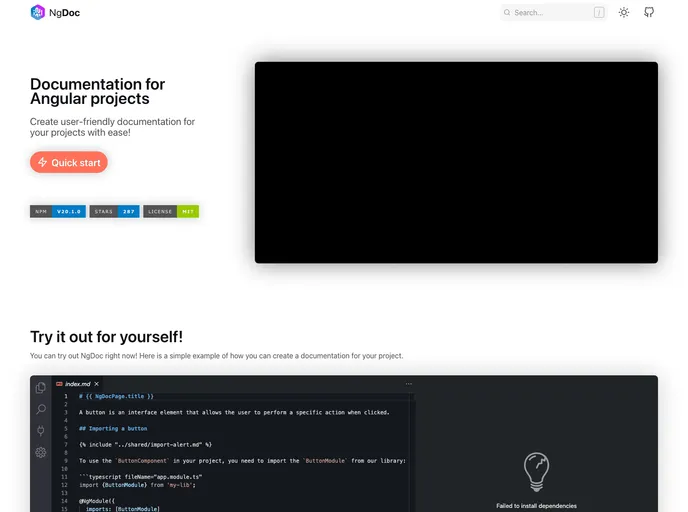


The documentation engine for Angular projects
Overview
NgDoc is an innovative tool designed specifically for enhancing the documentation process for Angular libraries and applications. Its primary aim is to streamline the workflow, enabling developers to focus on coding rather than getting bogged down by the complexities of documentation. With its user-friendly features, NgDoc significantly reduces the time and effort required to create comprehensive documentation.
This tool provides a flexible approach to documentation, allowing developers to quickly implement markdown templates, render demos, and generate links. By automating many tedious tasks, NgDoc not only simplifies the writing process but also ensures that your documentation remains clear and effective.
Features
- Dynamic Markdown Templates: Easily create guidelines with custom layouts using Nunjucks, making document styling intuitive and flexible.
- One-Line Demo Rendering: Display demos on your documentation page with just a single line of code, enhancing user interactivity and showcasing features effortlessly.
- Component Playgrounds: Create interactive playgrounds for Angular components and directives, allowing users to experiment with functionality in real-time.
- Keyword Linking: Automatically generate dynamic links to APIs, pages, or external websites using keywords, ensuring thorough cross-referencing.
- Inline API Links: Enhance code examples by automatically generating links to your API, improving navigation and usability for developers reading your documentation.
- Offline Search: Benefit from an integrated search feature that builds indexes quietly in the background, ensuring documentation is easy to navigate even without internet access.
- Customizable Interface: Tailor the user interface to fit your project’s branding and preferences, providing a cohesive experience for users.
- Community Contributions: Engage with a vibrant open source community, encouraging users to contribute and improve the project collaboratively.
- Angular
Angular is a TypeScript-based open-source framework by Google for building dynamic single-page applications and cross-platform mobile apps with MVC architecture and a rich set of features.
- Express
Express.js is a simple Node.js framework for single, multi-page, and hybrid web applications.
- Documentation

Documentation themes are built specifically for writing technical and product documentation. They are normally written and maintained in Markdown. The often include a navigation menu, search bar, clear headings, semantic document structure and clean typography.
- Eslint

ESLint is a linter for JavaScript that analyzes code to detect and report on potential problems and errors, as well as enforce consistent code style and best practices, helping developers to write cleaner, more maintainable code.
- Postcss

PostCSS is a popular open-source tool that enables web developers to transform CSS styles with JavaScript plugins. It allows for efficient processing of CSS styles, from applying vendor prefixes to improving browser compatibility, ultimately resulting in cleaner, faster, and more maintainable code.
- Typescript

TypeScript is a superset of JavaScript, providing optional static typing, classes, interfaces, and other features that help developers write more maintainable and scalable code. TypeScript's static typing system can catch errors at compile-time, making it easier to build and maintain large applications.