
Nextjs Ecommerce Template
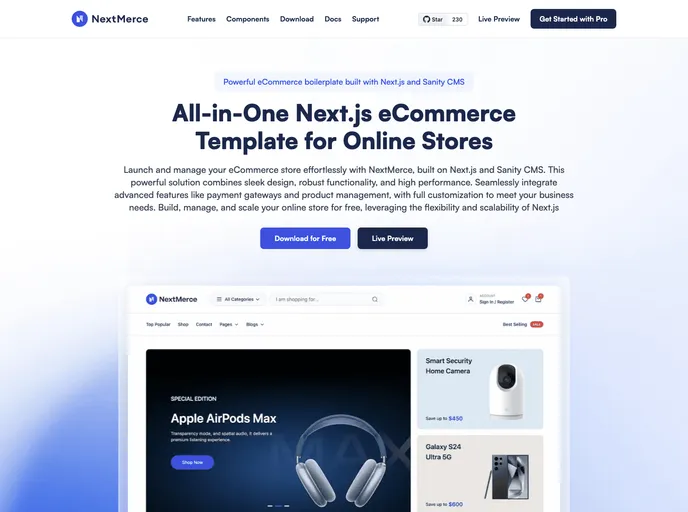


Free Next.js eCommerce Template - comes with all the essential sections, integrations, pages, and everything you need to manage powerful ecommerce store with power of Next.js and Sanity
Overview
The NextMerce free eCommerce template for Next.js is a fantastic starting point for anyone looking to set up an online store without the hefty price tag. This lite version retains the essential functionalities needed to create a functional and attractive eCommerce site, making it ideal for startups and small businesses. Unlike its Pro counterpart that offers advanced features, NextMerce Free is streamlined for efficiency, ultimately aiding in a smoother launch and management process.
What makes NextMerce stand out is its compatibility with Next.js, a powerful framework that ensures high performance and flexibility. This template serves as a great foundation for building an eCommerce platform while offering an easy setup process that's ideal for both developers and merchants alike.
Features
- Static Next.js Pages: The template offers static pages, ensuring quick load times and an excellent user experience right from the start.
- Limited Components: While it's a basic version, it includes essential components necessary for a straightforward eCommerce website.
- Included eCommerce Functionality: Key eCommerce functionalities come built-in, allowing you to manage products and transactions right away.
- Community Support: Users have access to community support, ensuring you have help when needed as you navigate building your store.
- Lifetime Free Updates: Enjoy peace of mind with lifetime updates that keep your template current and secure without the extra cost.
- No Premium Email Support: Unlike the Pro version, the free template does not offer premium email support, emphasizing its focus on core features.
- No Integrations: The lite version lacks integrations for databases and authentication, which may require additional effort to implement for more complex needs.
- Next.js
Next.js is a React-based web framework that enables server-side rendering, static site generation, and other powerful features for building modern web applications.
- React
React is a widely used JavaScript library for building user interfaces and single-page applications. It follows a component-based architecture and uses a virtual DOM to efficiently update and render UI components
- Tailwind
Tailwind CSS is a utility-first CSS framework that provides pre-defined classes for building responsive and customizable user interfaces.
- Sanity
Sanity is a fully customizable, API-first, and cloud-based headless content management system that enables developers to manage structured content across multiple channels and platforms.
- Ecommerce

Ecommerce websites sell products or services to customers through an online storefront. These websites typically include features such as product listings, shopping carts, payment processing, and order management tools.
- Templates & Themes

A template or theme refers to a pre-designed layout or structure that provides a basic framework for building a specific type of application or website. It typically includes good design, placeholder content and functional features, allowing developers to customize and fill in the details according to their specific needs.
- Eslint

ESLint is a linter for JavaScript that analyzes code to detect and report on potential problems and errors, as well as enforce consistent code style and best practices, helping developers to write cleaner, more maintainable code.
- Postcss

PostCSS is a popular open-source tool that enables web developers to transform CSS styles with JavaScript plugins. It allows for efficient processing of CSS styles, from applying vendor prefixes to improving browser compatibility, ultimately resulting in cleaner, faster, and more maintainable code.
- Typescript

TypeScript is a superset of JavaScript, providing optional static typing, classes, interfaces, and other features that help developers write more maintainable and scalable code. TypeScript's static typing system can catch errors at compile-time, making it easier to build and maintain large applications.