
Enju_leaf
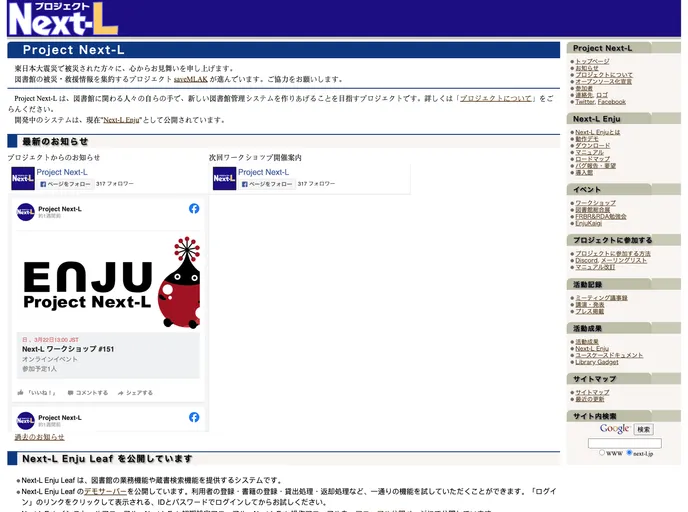


Next-L Enju Leaf 統合図書館管理システム / integrated library system https://enju.next-l.jp/
Overview
Next-L Enju Leaf is an integrated library system designed to streamline library management, developed by Project Next-L. Crafted by a dedicated group of Japanese volunteers, this project aims to provide libraries with a modern solution that integrates various functionalities needed for efficient operation. It's a community-driven initiative focused on fostering a more effective library ecosystem.
The system embodies the spirit of collaboration and innovation, making it a valuable asset for librarians and organizations looking to enhance their service offerings. With its user-friendly interface and comprehensive features, Next-L Enju Leaf seeks to revolutionize how libraries manage their cataloging, lending, and overall operations.
Features
-
User-Friendly Interface: Designed for ease of use, enabling librarians and patrons to navigate the system effortlessly.
-
Comprehensive Cataloging: Supports a wide range of media, allowing libraries to catalog various resources efficiently.
-
Lending Management: Streamlines the lending process with features that track check-outs and returns in real-time.
-
Community Collaboration: Developed by a team of passionate volunteers, fostering a sense of community and shared knowledge among users.
-
Open Source: Being an open-source project encourages transparency and allows for continuous improvement and contributions from users globally.
-
Documentation Available: Provides detailed manuals and installation guides to assist new users in getting started quickly.
-
Integration with Related Projects: Works seamlessly with other tools like Enju Root and Enju Flower, enhancing its overall capabilities.
- Ruby on Rails
Ruby on Rails, often referred to as Rails, is an open-source web application framework written in Ruby. Known for its convention over configuration and don't repeat yourself (DRY) principles, Rails simplifies and accelerates the development of database-backed web applications.
- React
React is a widely used JavaScript library for building user interfaces and single-page applications. It follows a component-based architecture and uses a virtual DOM to efficiently update and render UI components
- Webpack

Webpack is a popular open-source module bundler for JavaScript applications that bundles and optimizes the code and its dependencies for production-ready deployment. It can also be used to transform other types of assets such as CSS, images, and fonts.