
Nova Glassmorphism Nextjs Template
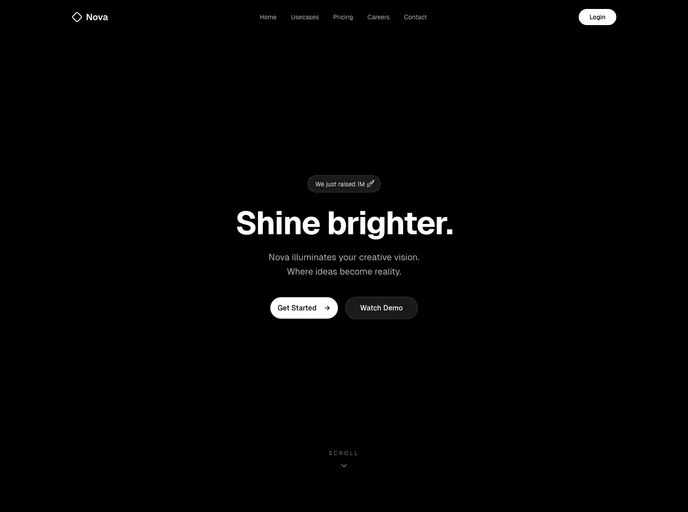


Scroll, and elegant animations. Includes Hero, Features, Pricing, CTA sections. Built with Next.js 15, TypeScript, Tailwind CSS v4, shadcn/ui & Framer Motion.
Overview
Next.js, a powerful React framework, provides an excellent way to build modern web applications with ease. Bootstrapped with create-next-app, it simplifies the development process for developers of all skill levels. This project allows for a smooth start, letting you focus on building your application while enjoying the benefits of rapid iteration and real-time updates.
The structure of the Next.js project makes it straightforward to customize and enhance your application. With features like automatic font optimization, you can create visually stunning websites without over-complicating your workflow. This guide will walk you through the key aspects that make Next.js a must-try for web developers.
Features
- Quick Development Setup: Easily bootstrap your project using create-next-app, getting you started in no time.
- Real-Time Editing: Modify files in the project, such as app/page.tsx, and see updates instantly in your browser.
- Automatic Font Optimization: Utilizes next/font to seamlessly load and optimize the Geist font family, enhancing the visual appeal of your site.
- Interactive Learning Resources: Access detailed documentation and an interactive tutorial to accelerate your understanding of Next.js features and APIs.
- Easy Deployment: Deploy your applications effortlessly using the Vercel Platform, which is designed to work seamlessly with Next.js.
- Community Contributions: Engage with the community through the Next.js GitHub repository, where your feedback and contributions are valued.
- Next.js
Next.js is a React-based web framework that enables server-side rendering, static site generation, and other powerful features for building modern web applications.
- React
React is a widely used JavaScript library for building user interfaces and single-page applications. It follows a component-based architecture and uses a virtual DOM to efficiently update and render UI components
- Tailwind
Tailwind CSS is a utility-first CSS framework that provides pre-defined classes for building responsive and customizable user interfaces.
- Eslint

ESLint is a linter for JavaScript that analyzes code to detect and report on potential problems and errors, as well as enforce consistent code style and best practices, helping developers to write cleaner, more maintainable code.
- Framer Motion

Alpine.js is a lightweight JavaScript framework that simplifies the process of creating dynamic, reactive user interfaces on the web. It uses a declarative syntax that offers a higher level of abstraction compared to vanilla JavaScript, while being more performant and easier to use than jQuery.
- Typescript

TypeScript is a superset of JavaScript, providing optional static typing, classes, interfaces, and other features that help developers write more maintainable and scalable code. TypeScript's static typing system can catch errors at compile-time, making it easier to build and maintain large applications.