
Vue Vuetify Admin
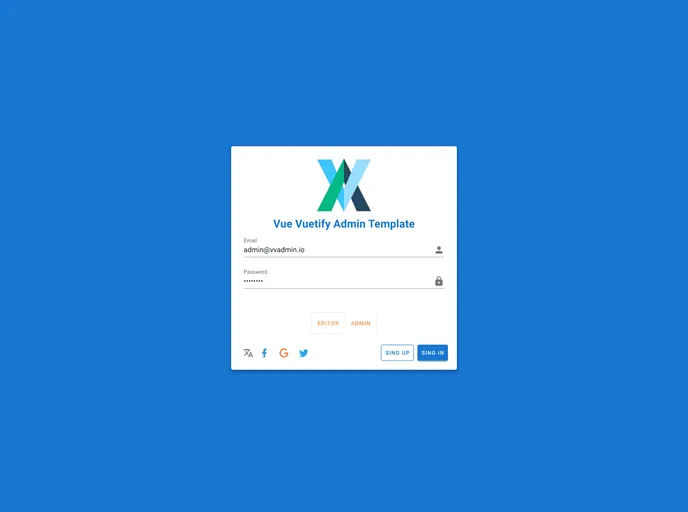



Admin panel based on vue2 and vuetify2
Overview:
vue-vuetify-admin is a production-ready front-end solution for admin interfaces. It is based on Vue and uses the material design component framework Vuetify. This magical Vue admin offers a built-in i18n solution, typical templates for enterprise applications, and numerous awesome features, allowing users to build large complex Single-Page Applications efficiently.
Features:
- Production-Ready Solution: Developed for admin interfaces, offering a robust and reliable solution.
- Vue and Vuetify Based: Utilizes Vue framework along with Vuetify material design component framework.
- Built-in i18n Solution: Includes built-in internationalization support.
- Typical Templates for Enterprise Applications: Provides templates suitable for enterprise-level applications.
- Support for Large Complex Single-Page Applications: Enables the development of extensive and intricate SPAs.
- Modern Development Stack: Utilizes the newest development stack of Vue for enhanced performance.
- Mock Data Support: Simulated request data using Mock.js for testing and development.
Summary:
vue-vuetify-admin is a powerful front-end solution for building admin interfaces using Vue and Vuetify. With its built-in i18n solution, support for enterprise application templates, and features for developing large complex SPAs, it offers a comprehensive toolset for developers. By following the installation guide, users can quickly set up and start leveraging the capabilities of vue-vuetify-admin for their projects.
- Vue
Vue.js is a lightweight and flexible JavaScript framework that allows developers to easily build dynamic and reactive user interfaces. Its intuitive syntax, modular architecture, and focus on performance make it a popular choice for modern web development.
- LESS
Less CSS is a dynamic stylesheet language that extends the capabilities of CSS, allowing developers to write cleaner, more modular, and reusable stylesheets with features like variables, mixins, and nested rules.
- SCSS
SCSS is a preprocessor scripting language that extends the capabilities of CSS by adding features such as variables, nesting, and mixins. It allows developers to write more efficient and maintainable CSS code, and helps to streamline the development process by reducing repetition and increasing reusability.
- Vuetify
Vuetify is a no design skills required UI Library with beautifully handcrafted Vue Components.
- Dashboard

A dashboard style website template is a pre-designed layout that features a user interface resembling a control panel or dashboard. It typically includes charts, graphs, tables, and other data visualization tools that allow users to monitor and analyze data in real-time.
- Eslint

ESLint is a linter for JavaScript that analyzes code to detect and report on potential problems and errors, as well as enforce consistent code style and best practices, helping developers to write cleaner, more maintainable code.