
Ssl Checker
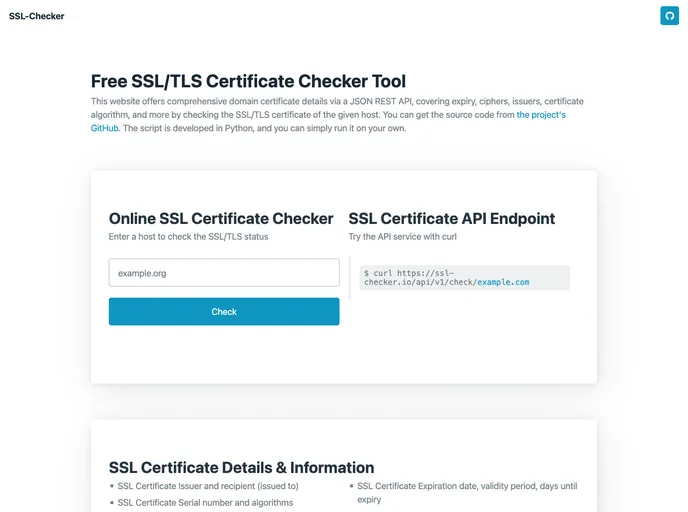
Python script that collects SSL/TLS information from hosts
Overview
The Python SSL/TLS Checker is a versatile and user-friendly script designed for collecting crucial SSL/TLS information from hosts. Whether you're a developer or a system administrator, this tool helps simplify the complexities of SSL certificate analysis by outputting comprehensive reports in formats like JSON, CSV, or HTML. With its ability to connect through SOCKS servers, the script ensures robust and flexible performance. Security is a priority, and the script goes the extra mile by assessing certificates for potential vulnerabilities and security issues.
This lightweight Python script not only fetches essential data but also offers options for customization, such as connecting through SOCKS proxies and the ability to analyze certificates in depth. Perfect for users needing a quick summary or detailed output, it is a valuable asset in maintaining secure web services.
Features
-
SSL Certificate Analysis: Includes a thorough security assessment of certificates, flagging any vulnerabilities directly in the output.
-
Multiple Output Formats: Easily export results in JSON, CSV, or HTML formats, catering to different reporting needs.
-
SOCKS Proxy Support: Connect securely through your specified SOCKS server, ideal for working in restrictive environments.
-
Flexible Host Input: Accepts hosts either via a designated file or directly through command line input, ensuring versatility in usage.
-
Timeout Configuration: Adjust the connection timeout with a customizable setting, providing control over how long to wait for a response.
-
Verbose Mode: Turn on verbose output for detailed troubleshooting information, which is helpful for debugging or enhancing script performance.
-
JSON per Host Export: Save results in separate JSON files for each host by using an easy command, perfect for organized data management.
-
Docker Compatibility: Run the script via Docker, allowing for simplified deployment in containerized environments.