
Generator Grail
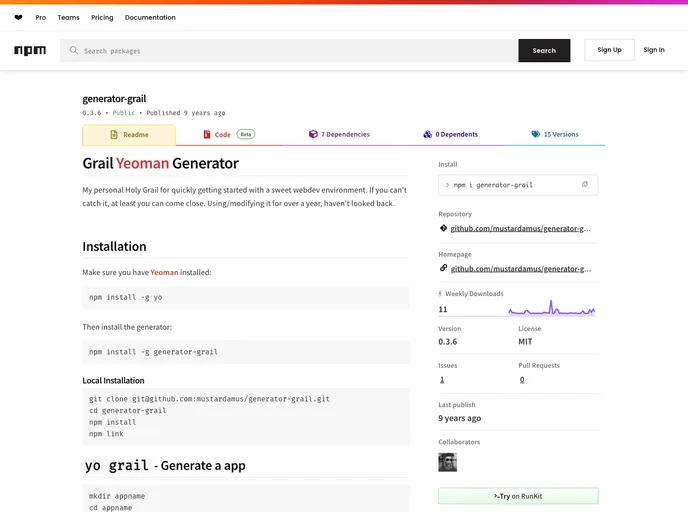

Yeoman Generator for a modular One Page Application with Gulp, CoffeeScript, Stylus, Browserify, BrowserSync and Mocha. Vue.js, jQuery, Semantic-UI, Socket.IO, Fastclick, Cheerio and Should.js optional on top. Minimal Express.js, Mongoose and Socket.IO Server Framework, if wanted. Authentication ...
Overview
The Grail Yeoman Generator is a powerful tool designed to streamline the development of web applications. With its modular approach, it allows developers to quickly establish a robust web development environment tailored to their needs. After using it for over a year, it has become an indispensable part of my workflow, enabling rapid prototyping and effective project scaling.
This generator not only simplifies the initial setup but also provides options for enhancing the application with various frontend libraries and backend solutions. Whether you're building a single-page application or a more complex web app, Grail keeps the process efficient and intuitive.
Features
-
Quick Installation: Get started swiftly by running the
yo grailcommand, which sets up a bare-bones web development environment with minimal effort. -
Modular Frontend: Easily extend your frontend application using popular libraries like Vue.js and jQuery, allowing for a customized user experience.
-
Node.js Backend Integration: With
yo grail:server, you can effortlessly add a backend framework utilizing Express.js and MongoDB, catering to dynamic server-side needs. -
User Authentication: The
yo grail:authoption provides a boilerplate for implementing user registration and authentication, essential for interactive applications. -
Continuous Workers: The
yo grail:workersfeature enables the creation of background workers, allowing your application to handle tasks at scheduled intervals without hindering the main application flow. -
Component Creation: With
yo grail:create, generate client or server components quickly, tailored to your project’s requirements while being prompted for various options. -
Comprehensive Documentation: Each generator command offers thorough documentation, ensuring that developers understand the setup and can fully utilize the features provided.
- Semantic UI
Semantic UI is a popular front-end development framework that provides a set of pre-designed user interface components to help developers create responsive and mobile-friendly web applications with ease. It emphasizes a clear and intuitive naming convention for CSS classes, making it easier to customize and maintain the design of web applications.
- Gulp

Gulp.js is an old but popular site building tool that automates various repetitive development tasks in web development, such as compiling Sass, minifying JavaScript, and optimizing images.