
Pontoon
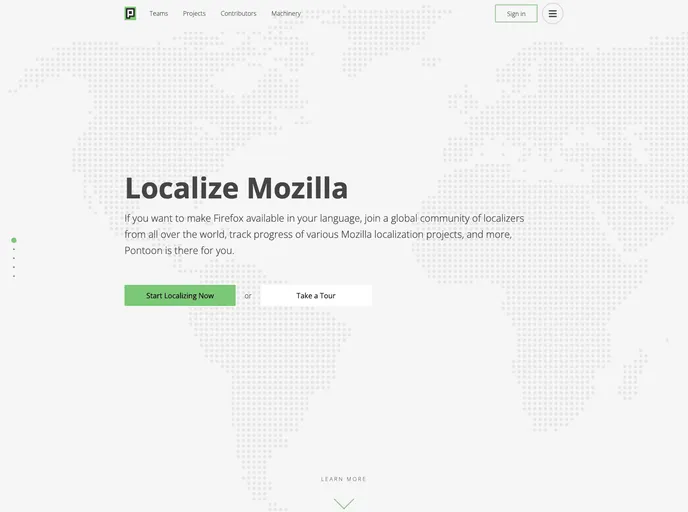

Mozilla's Localization Platform
Overview
Pontoon is a powerful translation management system developed by the Mozilla localization community, designed to enhance open source localization efforts. Its unique approach combines community-driven initiatives with sophisticated version control systems, making it a valuable tool for anyone looking to manage translations effectively. Whether you're a developer, translator, or a project manager, Pontoon offers a streamlined platform to contribute to and maintain multilingual projects.
What sets Pontoon apart is its flexibility in deployment options, allowing users to run it locally or on platforms like Heroku easily. With extensive documentation and a supportive community, new contributors can quickly learn how to make meaningful contributions to the project. Overall, Pontoon provides an inviting gateway into the world of localization, perfectly suited for both individual developers and collaborative community efforts.
Features
-
Community-Driven Localization: Pontoon emphasizes collaboration by allowing contributors to engage actively in the translation process.
-
Version Control Integration: The platform leverages version control systems to store and manage translations, ensuring that updates are both organized and efficient.
-
Flexible Deployment Options: Users can host their own instance of Pontoon either through simplified deployment on Heroku or by setting it up locally using Docker for development purposes.
-
Comprehensive Documentation: Pontoon provides thorough guides and documentation, making it easy for new users to get started and assist in contributing to the platform.
-
Support for Contributors: The platform encourages community involvement with resources like the guide to first contributions and a roadmap for development.
-
Chat and Feedback Channels: Users have access to dedicated discussion forums and chat channels for support and giving feedback, promoting a collaborative environment.
-
Open Source Licensing: Licensed under the New BSD License, Pontoon allows users to freely use, modify, and distribute the software, fostering innovation in localization projects.
- Django
Django is a high-level Python web framework that encourages rapid development and clean, pragmatic design. It follows the model-view-controller (MVC) architectural pattern, providing an extensive set of built-in tools and conventions to streamline the creation of robust and scalable web applications.
- Eslint

ESLint is a linter for JavaScript that analyzes code to detect and report on potential problems and errors, as well as enforce consistent code style and best practices, helping developers to write cleaner, more maintainable code.
- Rollup

RollupJS is a popular and efficient JavaScript module bundler that takes the code from multiple modules and packages them into a single optimized file, minimizing the overall size of the application and improving its performance.
- Typescript

TypeScript is a superset of JavaScript, providing optional static typing, classes, interfaces, and other features that help developers write more maintainable and scalable code. TypeScript's static typing system can catch errors at compile-time, making it easier to build and maintain large applications.