
Monitorr
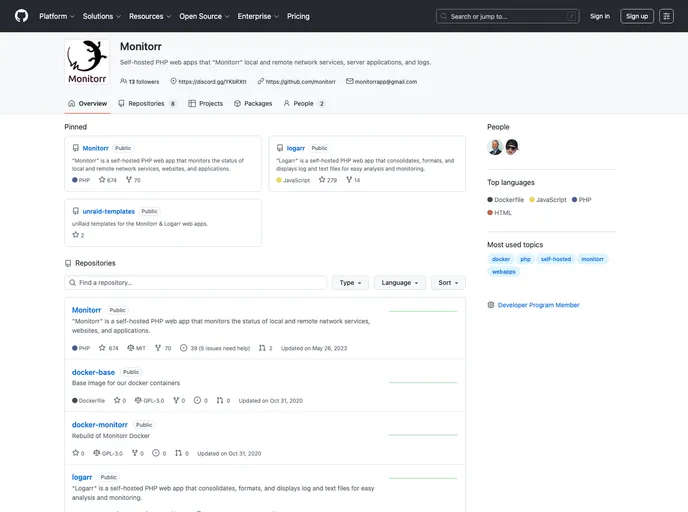
"Monitorr” is a self-hosted PHP web app that monitors the status of local and remote network services, websites, and applications.
Overview
Monitorr serves as an innovative web front that provides real-time monitoring for your web applications and services. It's designed to be self-hosted, making it accessible for individuals and organizations alike. With its user-friendly interface and array of functionality, Monitorr is perfect for anyone looking to keep an eye on service status and performance metrics effectively.
This application stands out for its responsiveness and customization potential, allowing users to easily adapt its features to meet their specific needs. From live updates to detailed system resource monitoring, Monitorr offers a comprehensive suite of tools to ensure your web services are running smoothly.
Features
-
Multi HD Display: Monitorr supports multiple high-definition displays, allowing you to keep track of various services simultaneously.
-
Live Updates: Enjoy real-time updates with an option to pause, enabling you to manage the information flow easily.
-
Self-Hosted: This feature allows you to run Monitorr on your own server, giving you full control over your data.
-
Service Monitoring: Monitor any application or service on any domain, utilizing cURL as the primary checking method, with a fallback to fsockopen when needed.
-
Responsive Mobile Display: The user interface adjusts seamlessly for mobile viewers, providing accessibility on the go.
-
Customizable Alerts: Future updates will introduce alerting features for email and text notifications, keeping you informed across devices.
-
System Resource Display: Get insights into vital system metrics like CPU, memory, hard drive usage, and uptime, all updated to keep you informed.
-
Custom CSS Tool: Personalize the look and feel of your Monitorr interface with a new custom CSS tool, enhancing user experience significantly.
- Docker

A website that uses Docker for containerization to streamline development, testing, and deployment workflows. This includes features such as containerization of dependencies, automated builds and deployments, and container orchestration to ensure scalability and availability.