
Modulo
A drop-in JavaScript framework for modular web components, kept to about 2000 lines
Overview
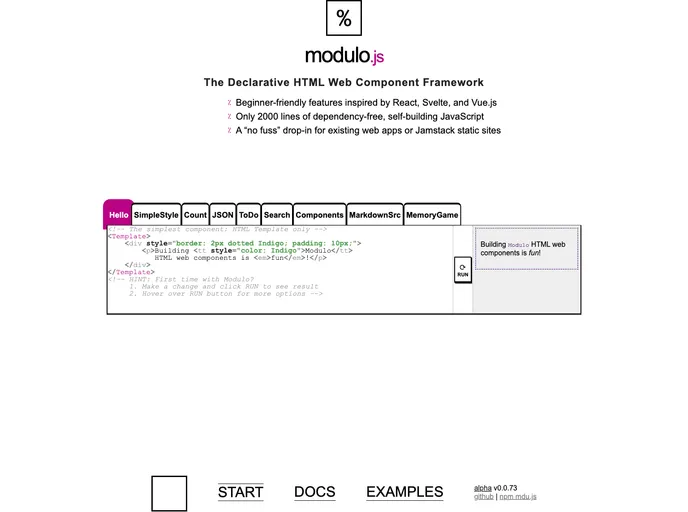
Modulo is an innovative lightweight framework designed to streamline the creation of HTML Web Components, which are simply reusable snippets of HTML, CSS, and JavaScript that define new HTML tags. This framework simplifies development by running entirely in the browser and requires only a few lines of code to incorporate into any HTML file, offering a truly beginner-friendly experience. With features inspired by popular frameworks like React, Svelte, and Vue.js, Modulo stands out for its compact 2000 lines of dependency-free, self-building JavaScript, making it an excellent choice for both novices and seasoned developers looking to enhance their web apps or Jamstack static sites.
Even though Modulo is still in its alpha stage, it comes well-documented and offers a wealth of examples to guide users through the process of creating custom components. By presenting a blend of simplicity and functionality, Modulo invites developers to experiment and contribute, paving the way for a community-driven evolution of this promising framework.
Features
-
Lightweight Framework: Modulo is just 2000 lines of dependency-free JavaScript, ensuring quick loading times and minimal impact on performance.
-
Beginner-Friendly: Designed with simplicity in mind, making it easy for newcomers to grasp the concepts of web component creation.
-
No Terminal Required: Easily integrate Modulo into your project without needing command-line tools, using just a few lines of code in an HTML file.
-
Reusable Components: Define custom HTML elements that can be used and reused throughout your site, enhancing code modularity and reducing redundancy.
-
Interactive Demos: Offers hands-on tutorials that allow you to see the framework in action and learn as you go.
-
Flexible Setup: Choose between a browser-based setup or using NPM for those who prefer command-line tools, catering to different developer preferences.
-
Designed for Modern Development: Incorporates features inspired by popular frameworks like React, Svelte, and Vue.js, ensuring a familiar experience for many developers.
-
Community and Development Status: Currently in alpha, inviting contributions and feedback to shape its future development.
- Web Components

Web components provide a way to create reusable, encapsulated UI components using standard web technologies such as HTML, CSS, and JavaScript. They allow developers to create complex UI components that can be easily shared across multiple projects and frameworks. Web components are built using four main specifications: Custom Elements, Shadow DOM, HTML Templates, and ES Modules.