
Made Mistakes Jekyll
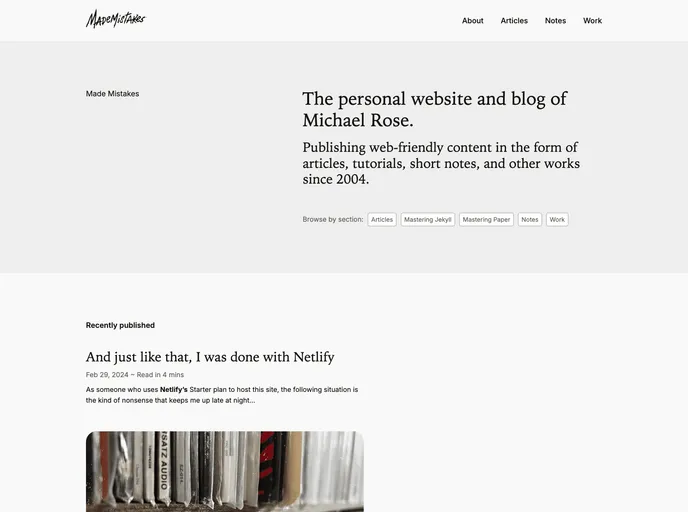

Deprecated source for mademistakes.com. Previously built with Jekyll, Gulp, and Netlify.
Overview:
The Made Mistakes Source Code is the source code for the personal blog and portfolio called Made Mistakes. It is built with Jekyll, Gulp, and Netlify. This source code is not "themed" like some other Jekyll repositories and requires substantial alterations to be compatible with the "default" GitHub Pages workflow.
Features:
- Jekyll Sitemap: Generates a sitemap for the website, supported by GitHub Pages.
- Jemoji: Allows the use of emoji in the content.
- Jekyll Paginate v2: Provides pagination functionality for blog posts.
- Jekyll TOC: Generates a table of contents for the pages.
- Images: The image assets are stored in a separate repository as a Git submodule. Feature images should be placed in the src/assets/images/feature directory.
- Content helpers: Includes helpers for displaying notices and generating figure elements with captions and class parameters.
- Lazyload: Provides lazy loading functionality for images.
- Responsive video embed: Allows embedding responsive videos from YouTube or Vimeo.
Summary:
The Made Mistakes Source Code is a personal blog and portfolio built with Jekyll, Gulp, and Netlify. It includes various features such as sitemap generation, emoji support, pagination, table of contents generation, lazy loading of images, and responsive video embedding. Installing the source code requires cloning the repository, installing dependencies, building assets, and running a local development server.
- Jekyll
Jekyll is a static site generator written in Ruby that allows you to create simple, fast, and secure websites without the need for a database.
- SCSS
SCSS is a preprocessor scripting language that extends the capabilities of CSS by adding features such as variables, nesting, and mixins. It allows developers to write more efficient and maintainable CSS code, and helps to streamline the development process by reducing repetition and increasing reusability.
- Personal

A personal website is an online platform that showcases an individual's work, interests, and personality. It can include a range of content, such as a bio, resume, portfolio, blog, and contact information, and is often used to promote one's personal brand or professional services.
- Algolia

Algolia is a search engine API that enables developers to integrate lightning-fast search functionality into their websites and applications. It features extensive documentation, powerful query options, and a user-friendly dashboard for managing and monitoring search performance.
- Formspree
A website that uses Formspree for form management to enable seamless form submissions and handling. This includes features such as email notifications, custom form handling, and spam protection to ensure a smooth and secure form submission process.
- Gulp

Gulp.js is an old but popular site building tool that automates various repetitive development tasks in web development, such as compiling Sass, minifying JavaScript, and optimizing images.
- Netlify

Netlify is a cloud-based web development platform that provides a range of tools and services to help developers build, deploy, and manage modern web applications. It offers features such as continuous deployment, serverless functions, and CDN hosting, making it an ideal platform for building fast, scalable, and secure websites.
- Postcss

PostCSS is a popular open-source tool that enables web developers to transform CSS styles with JavaScript plugins. It allows for efficient processing of CSS styles, from applying vendor prefixes to improving browser compatibility, ultimately resulting in cleaner, faster, and more maintainable code.