
PWA_Starter
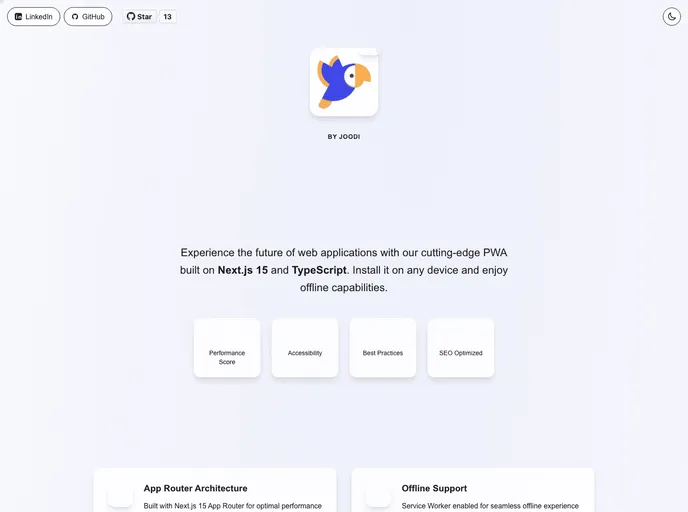


A starter kit to quickly build fast, offline-capable Progressive Web Apps using Next.js 15 and TypeScript. Includes service worker setup, manifest configuration, and ready-to-use PWA features for a seamless user experience across devices.
Overview
The PWA Starter with Next.js 15 and TypeScript is an impressive toolkit designed for developers eager to create fast and efficient Progressive Web Applications (PWAs). Built on the robust Next.js 15 framework, it leverages TypeScript for enhanced type safety, ensuring both performance and reliability in web development. This starter kit not only simplifies the setup of essential PWA features, but also aims to deliver a seamless user experience across varying devices.
This comprehensive package includes everything from service worker configurations to a complete PWA manifest, putting a strong emphasis on offline support and efficient application performance. Whether you're a seasoned developer or just venturing into the realm of PWAs, this starter kit offers an accessible and effective means to kickstart your project with style and functionality.
Features
- Next.js 15 App Router Architecture: Utilizes the latest Next.js 15 features for enhanced routing and application structure, making development smoother and more logical.
- Offline Support with Service Worker: Ensures your application remains accessible offline, providing a reliable user experience even without an internet connection, facilitated by the next-pwa plugin.
- Complete PWA Manifest: Comes with a fully configured manifest that includes icons, enabling easy installation and a native-like experience for users.
- Tailwind CSS for Styling: Features Tailwind CSS, allowing developers to apply utility-first styling effortlessly, promoting a fast and modern design approach.
- TypeScript Support for Type Safety: Incorporates TypeScript into the development process, which aids in minimizing errors and improving code quality through static type checking.
- Quick Setup Instructions: Offers clear and concise setup guidelines, enabling users to get up and running in no time with a simple installation process.
- Development and Production Scripts: Provides essential scripts for development, building production-ready applications, and running linting checks to maintain code quality.
- Next.js
Next.js is a React-based web framework that enables server-side rendering, static site generation, and other powerful features for building modern web applications.
- React
React is a widely used JavaScript library for building user interfaces and single-page applications. It follows a component-based architecture and uses a virtual DOM to efficiently update and render UI components
- Tailwind
Tailwind CSS is a utility-first CSS framework that provides pre-defined classes for building responsive and customizable user interfaces.
- Pwa
A Progressive Web App (PWA) is a type of web application that uses modern web technologies to provide a native app-like experience to users, including offline functionality, push notifications, and device hardware access. PWAs can be installed on a user's home screen and launched like a traditional app, but do not require a separate app store listing or download.
- Typescript

TypeScript is a superset of JavaScript, providing optional static typing, classes, interfaces, and other features that help developers write more maintainable and scalable code. TypeScript's static typing system can catch errors at compile-time, making it easier to build and maintain large applications.