
Meteor Migrations
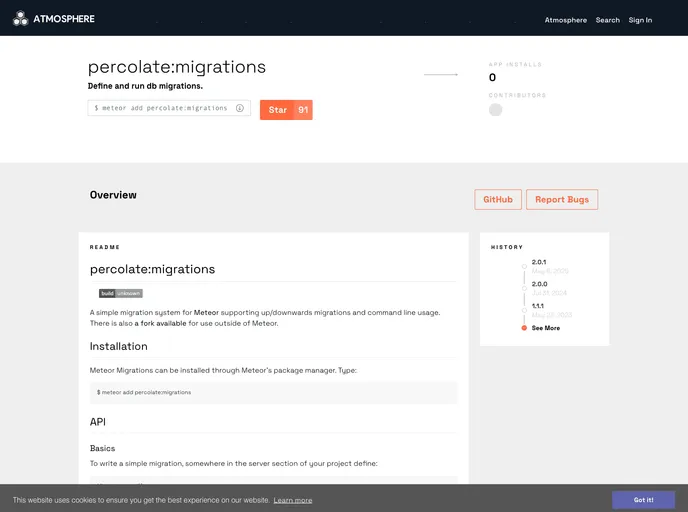

Simple migration system for Meteor
Overview:
The percolate:migrations package for Meteor presents itself as a straightforward migration system designed to facilitate both upwards and downwards migrations. This utility not only provides command-line functionality but also offers a comprehensive solution for managing database schema changes efficiently. The ability to integrate with Meteor's built-in logging system further enhances its usability, making it an essential tool for developers who manage complex applications and databases.
With features that allow for direct version migrations, rollback capabilities, and customizable logging, percolate:migrations appeals to developers who seek control and flexibility in their data migration processes. Having a default configuration that can be adjusted as necessary adds another layer of adaptability to this package.
Features:
-
Simple Migration System: Easily manages both upward and downward migrations for your Meteor applications, simplifying database schema changes.
-
Command Line Usage: Provide a simple command line interface for executing migrations, though note that this feature is deprecated for versions after 0.9.
-
Version Control: Migrate directly to a specified version, allowing quick access to different states of your database without hassle.
-
Logging Configuration: Utilize Meteor's logging package or implement your own custom logger for enhanced tracking of migration activities.
-
Custom Collection Names: Change the default migrations collection name to avoid conflicts when using the same MongoDB for multiple Meteor applications.
-
Error Handling: Includes mechanisms for handling errors during migrations, including generating locks to prevent simultaneous migrations in clustered environments.
-
Rerun Capabilities: If needed, migrations can be easily rerun in cases where something goes wrong, providing developers with a safety net during deployment.
-
Startup Integration: Run migrations seamlessly within Meteor's startup routine, ensuring proper initialization and logging configuration.
- Meteor
Meteor.js is a full-stack JavaScript platform that simplifies web application development by allowing developers to use a single codebase for both the client and server sides. It provides an integrated set of technologies, including real-time data updates, a reactive templating engine, and a built-in package management system, streamlining the process of building modern and scalable web applications.