
Project JekyllStyleguide
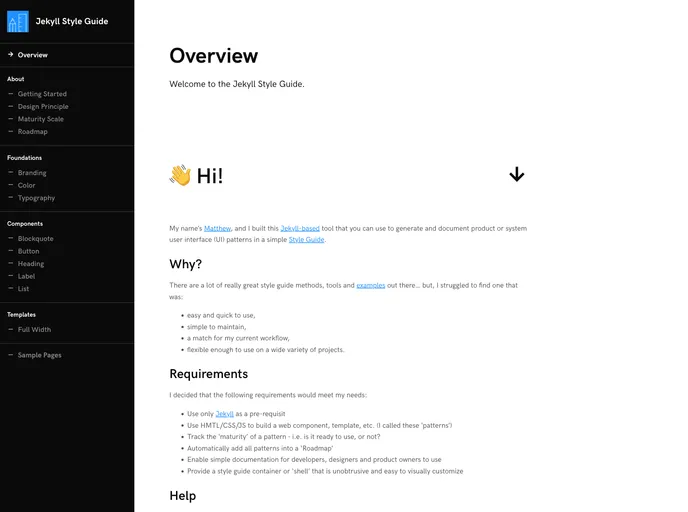
Jekyll-based boilerplate that lets you generate and document UI patterns in a style guide.
Overview
The Jekyll Style Guide is a powerful tool designed to simplify the process of generating and documenting user interface (UI) patterns. Developed by Matthew Elsom, this Jekyll-based resource stands out for its user-friendly approach, making it easy for developers, designers, and product owners to create and maintain style guides efficiently. With an emphasis on flexibility, the Jekyll Style Guide is an ideal solution for those seeking to establish a coherent design language across various projects.
This tool meets a variety of needs while remaining straightforward to implement. It serves as a versatile container for UI components and templates, allowing teams to keep track of their design elements as they evolve. The combination of ease of use, customization options, and a clear workflow makes the Jekyll Style Guide a noteworthy choice for any project aiming to enhance its design consistency.
Features
- Jekyll Integration: Designed to work solely with Jekyll, making it easy to incorporate into existing workflows.
- Pattern Maturity Tracking: Helps users keep tabs on the readiness of patterns, ensuring that only appropriate designs are put into use.
- Auto-Generated Roadmap: Automatically aggregates all patterns into a visual roadmap for easy reference and tracking.
- Comprehensive Documentation: Offers straightforward documentation for all stakeholders, enhancing collaboration among developers, designers, and product owners.
- Customizable Shell: Provides a style guide container that is unobtrusive and can be customized visually to fit project branding.
- Open Source License: Available under the Apache license version 2.0, allowing free usage and modification without commercial restrictions.
- Browser Compatibility: Tested with Google Chrome (Mac) and iOS Safari, ensuring a reliable experience across major platforms.
- Built with Best Practices: Based on established design standards and built using a robust SCSS architecture, ensuring a high-quality foundation for projects.