
Nanoblog
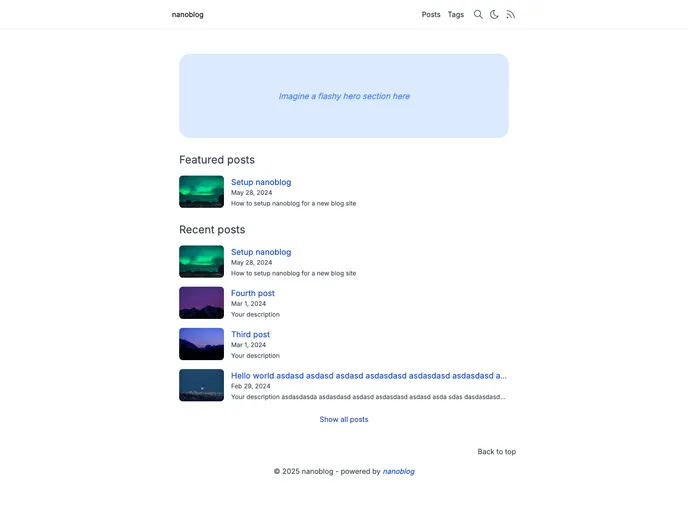



Lightweight Astro blog template using UnoCSS
Overview
The nanoblog is a lightweight Astro blog template designed to provide developers and bloggers with an efficient way to create appealing and responsive websites. At just around 7 kB per page, it ensures quick loading times, making it a perfect choice for those interested in an optimal user experience. With features catering to both aesthetic and functional needs, this template is perfect for anyone looking to manage and showcase their content seamlessly.
Features
- Lightweight: Weighing only about 7 kB per page, it allows for fast load times and improved performance.
- Fully Responsive: Adapts beautifully to any screen size, ensuring a pleasant viewing experience on all devices.
- Light + Dark Mode: Switch between light and dark themes effortlessly, providing flexibility based on user preferences.
- Full-Text Search: Users can easily find content with an efficient search functionality that enhances navigation.
- Featured & Draft Posts: Highlight important posts or save them for later with a straightforward drafting feature.
- Pagination: Easily navigate through multiple pages of content, keeping the layout clean and organized.
- Sitemap Generation: Automatically generates a sitemap, improving site structure for both users and search engines.
- SEO Optimizations: Built-in meta and OG tags enhance search engine visibility and sharing capabilities.
- RSS Feed: Stay connected with followers through the integrated RSS feed option.
- Reading Time Calculation & Progress: Readers can see estimated reading times and track their progress as they read through the posts.
- Support for Blog Thumbnails: Enhance the visual appeal of blog posts with supportive thumbnail images.
This combination of features makes nanoblog a practical and stylish choice for bloggers seeking streamlined content management.
- Astro
Astro is the all-in-one web framework designed for speed. Pull your content from anywhere and deploy everywhere, all powered by your favorite UI components and libraries.
- Solid
SolidJS is a declarative JavaScript library for building user interfaces, offering a reactive programming model for efficient updates. It stands out for its reactivity system that minimizes unnecessary re-renders and its small bundle size, making it a performant choice for developing lightweight and reactive web applications.
- UnoCSS
UnoCSS is an instant, on-demand atomic CSS engine that generates utility classes at build time. It's highly customizable, extremely fast, and compatible with Tailwind CSS utilities while offering additional features like attributify mode and pure CSS icons.
- Blog

Blog websites feature posts written by one or more authors, organized by categories and tags, with a section for comments and archives sorted by date or topic. Additional features may include search bar, social media sharing, subscription or RSS feed, about and contact pages, and visual content.
- Templates & Themes

A template or theme refers to a pre-designed layout or structure that provides a basic framework for building a specific type of application or website. It typically includes good design, placeholder content and functional features, allowing developers to customize and fill in the details according to their specific needs.
- Typescript

TypeScript is a superset of JavaScript, providing optional static typing, classes, interfaces, and other features that help developers write more maintainable and scalable code. TypeScript's static typing system can catch errors at compile-time, making it easier to build and maintain large applications.