
Nhost Template
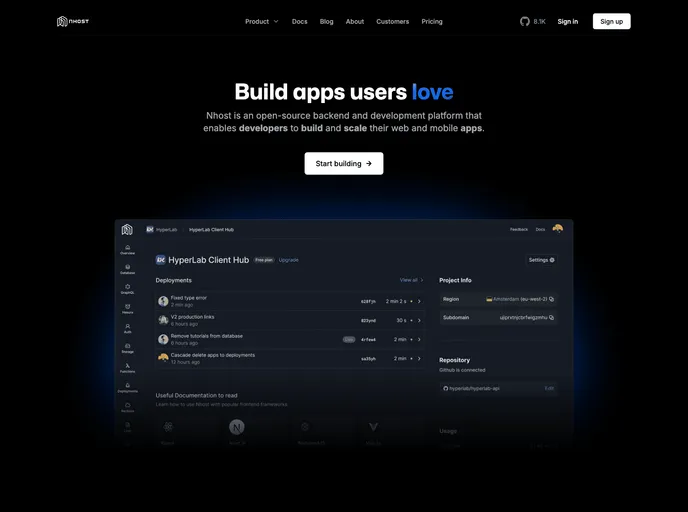

Overview
NHost Template for Nuxt is an innovative solution that integrates a powerful PostgreSQL database alongside GraphQL, file storage, and authentication capabilities all within your Nuxt.js application. This template simplifies the development process by offering preconfigured settings that allow developers to focus on building excellent user experiences without getting bogged down by boilerplate code. With built-in support for essential features like authentication and data management, it stands out as a versatile choice for modern web development.
This template also emphasizes customizability, letting you tweak configurations to better fit your project's needs. Whether you're a seasoned developer or just starting with web applications, NHost Template for Nuxt provides a solid foundation for your next project.
Features
- GraphQL Support: Seamlessly integrated GraphQL support via @nuxtjs/apollo, making data fetching straightforward and efficient.
- Authentication: Custom authentication configurations provided by plugins/refreshScheme.js, enabling the use of JWT refresh tokens for added security.
- File Storage: Easy management of file storage directly through the NHost backend, which simplifies handling user uploads.
- Tailwind CSS Integration: Preconfigured with Tailwind for rapid styling, enhancing your UI without needing to set up styles from scratch.
- Environment Variables: Simplifies customization by allowing modifications through the .env file for GraphQL and authentication URLs.
- Template Setup: Quick setup process via GitHub, allowing you to create new repositories efficiently with just a click or through terminal commands.
- Apollo Configuration: Built-in configuration in plugins/apollo.js for adding bearer tokens to websocket requests, ensuring smooth real-time data updates.
- Access Control: Configurations in plugins/auth.js manage user access to pages, enhancing your app's security and user management.
- Nuxt
nuxt.js is a lightweight and flexible JavaScript framework that allows developers to easily build dynamic and reactive user interfaces. Its intuitive syntax, modular architecture, and focus on performance make it a popular choice for modern web development.
- Templates & Themes

A template or theme refers to a pre-designed layout or structure that provides a basic framework for building a specific type of application or website. It typically includes good design, placeholder content and functional features, allowing developers to customize and fill in the details according to their specific needs.
- Apollo

Apollo is an open-source platform for building GraphQL APIs that connects with any data source. It provides a powerful set of tools and features for developers, including client and server-side caching, real-time data synchronization, and a seamless integration with popular frontend frameworks.
- Eslint

ESLint is a linter for JavaScript that analyzes code to detect and report on potential problems and errors, as well as enforce consistent code style and best practices, helping developers to write cleaner, more maintainable code.
- Graphql
A website that uses GraphQL as a query language to manage data fetching and state management. This includes features such as a strongly typed schema, client-side caching, and declarative data fetching to streamline data management and optimize website performance.