
Gomponents Tailwind Example
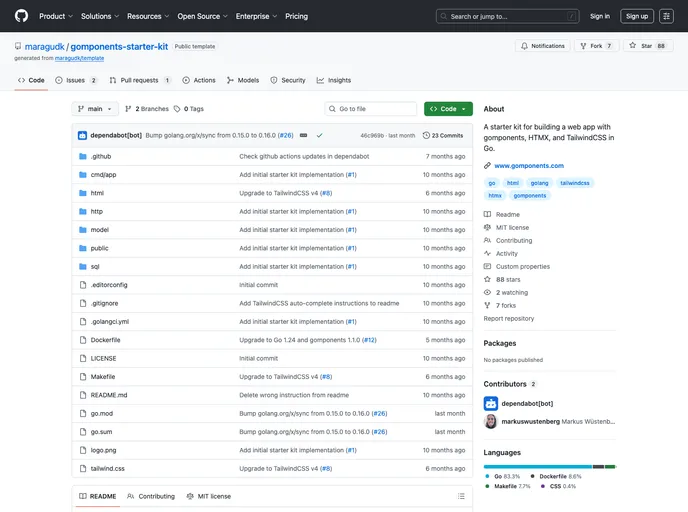

Deprecated: see github.com/maragudk/gomponents-starter-kit instead.
Overview
Gomponents is an innovative tool designed to enhance the web development experience by integrating seamlessly with TailwindCSS. This combination allows developers to build flexible and scalable view components that effortlessly adopt Tailwind's utility-first styling approach. With a simple setup process, this project provides a robust platform for creating visually appealing user interfaces that are both functional and responsive.
Navigating through the project is straightforward; after cloning the repository, a quick command initiates the application, making it ready to run on your local server. Whether you're a seasoned developer or a newcomer to web design, this integration of gomponents and TailwindCSS is poised to elevate your projects.
Features
- Easy Setup: Clone the repository and run a single command to start the server; no complex configurations required.
- Seamless Integration: Effortlessly merge gomponents with TailwindCSS for a performance-focused development approach.
- Utility-First Design: Take advantage of Tailwind's utility classes to create responsive and visually consistent components.
- Local Development: Launch your application on localhost for immediate testing and feedback on design changes.
- Documentation Support: Access detailed guides and blog posts to help you understand how to leverage these tools together effectively.
- Community-Driven: Engage with a growing community of developers interested in optimizing their workflow with these technologies.
- Tailwind
Tailwind CSS is a utility-first CSS framework that provides pre-defined classes for building responsive and customizable user interfaces.
- Postcss

PostCSS is a popular open-source tool that enables web developers to transform CSS styles with JavaScript plugins. It allows for efficient processing of CSS styles, from applying vendor prefixes to improving browser compatibility, ultimately resulting in cleaner, faster, and more maintainable code.