
Portofino
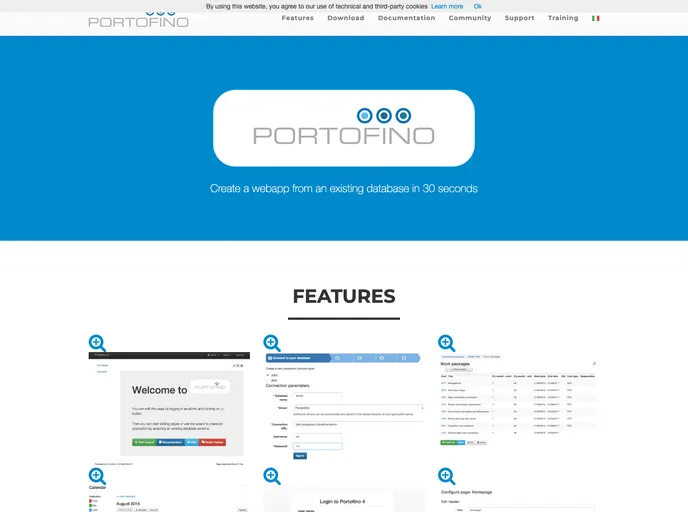

Portofino 5 is the next generation of the open-source low-code web framework Portofino. Its purpose is to help developers create modern, responsive enterprise applications with REST APIs and an Angular UI.
Overview
Portofino is an innovative low-code tool designed for building model-driven REST APIs and web applications. Developed by ManyDesigns, based in Genova, Italy, Portofino allows users to create visually appealing applications for both web and mobile platforms. With a focus on simplified development processes, it enables developers to either generate applications automatically using a wizard or manually configure them through a user-friendly web interface. The tool combines the strengths of both Java and Groovy, making it adaptable to various development styles.
This platform stands out by offering a highly customizable experience that empowers developers to extend functionalities and tailor applications to their needs. Whether you're a seasoned programmer or a novice, Portofino’s blend of straightforward usability and robust capabilities makes it an attractive choice for building modern digital solutions.
Features
-
Low-Code Development: Quickly generate web applications with a wizard that analyzes your relational database, reducing the need for extensive coding.
-
Customizable Backend: Leverage a highly adaptable backend service that exposes data through RESTful APIs, ensuring seamless integration with other services.
-
Responsive UI: Design mobile-friendly applications with user interfaces built on Angular Material, providing a modern look and feel.
-
Comprehensive Security: Implement robust authentication, authorization, and user management features to protect application data and user interactions.
-
Multi-Language Support: Reach a global audience with translations available in several languages, including English, Italian, French, German, Spanish, and Arabic.
-
Live Development Options: Develop applications in a "PHP style" by directly editing live applications or in a "Java style" with an IDE and build system for more organized development.
-
Extendable Framework: Easily add custom REST resources and Angular components, along with built-in services through dependency injection from popular libraries like Spring and Hibernate.
-
No Installation Needed: Simply unzip the provided bundle, which includes Apache Tomcat, Portofino, and JDBC drivers for popular open-source databases, making setup a breeze.
- Angular
Angular is a TypeScript-based open-source framework by Google for building dynamic single-page applications and cross-platform mobile apps with MVC architecture and a rich set of features.