
Integrate Payments
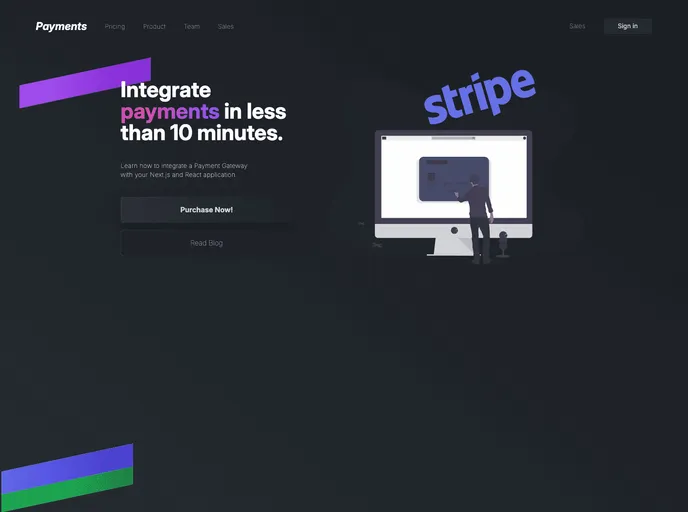


Integrate payments with Next.js, TailwindCSS, and Razorpay. Blog live on freeCodeCamp .
Overview
Integrating payments into a web application can often feel like a daunting task, but with the power of Next.js, TailwindCSS, and Razorpay, it becomes a seamless process. This combination not only enhances the user experience but also ensures that the payment handling is efficient and secure. If you are looking to set up a payment system for your next project, this integration guide is a brilliant resource that highlights the potential of these tools working together.
The setup allows you to create both mobile and desktop-friendly applications with visually appealing designs. With clear navigation and user-friendly call-to-action prompts, visitors can make payments effortlessly. This guide showcases a clean and efficient way to manage payment integrations, making it an invaluable resource for developers.
Features
- International and Domestic Payments: Easily accept payments from all over the world, making your platform accessible to a wider audience.
- Responsive Layout: The application is designed to work perfectly on both mobile and desktop devices, ensuring a smooth user experience across platforms.
- Customization Options: Tailor the payment popup to reflect your brand identity, adding a personal touch to user interactions.
- Single Page Architecture: Built with a single file (index.js) that manages the entire payment flow, simplifying the coding process.
- Robust Tech Stack: Utilizes Next.js for dynamic React components, TailwindCSS for responsive styling, and Razorpay as the payment gateway.
- Easy Deployment: With just a few steps on Vercel, you can deploy your project effortlessly, enhancing your workflow with CI/CD practices.
- Open Source License: The template is free to use for personal or client projects, promoting open-source contributions and community support.
- Next.js
Next.js is a React-based web framework that enables server-side rendering, static site generation, and other powerful features for building modern web applications.
- React
React is a widely used JavaScript library for building user interfaces and single-page applications. It follows a component-based architecture and uses a virtual DOM to efficiently update and render UI components
- Tailwind
Tailwind CSS is a utility-first CSS framework that provides pre-defined classes for building responsive and customizable user interfaces.
- Eslint

ESLint is a linter for JavaScript that analyzes code to detect and report on potential problems and errors, as well as enforce consistent code style and best practices, helping developers to write cleaner, more maintainable code.
- Postcss

PostCSS is a popular open-source tool that enables web developers to transform CSS styles with JavaScript plugins. It allows for efficient processing of CSS styles, from applying vendor prefixes to improving browser compatibility, ultimately resulting in cleaner, faster, and more maintainable code.