
Django Registration
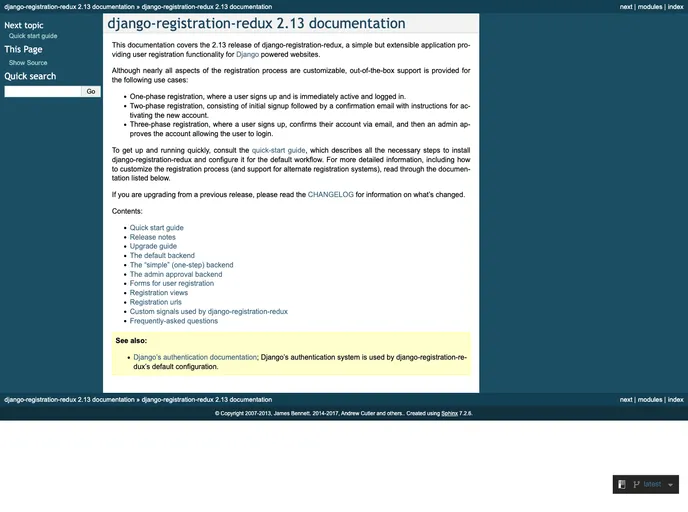

Django-registration (redux) provides user registration functionality for Django websites.
Overview
Django Registration is a powerful tool designed to streamline the user registration process for Django-based websites. This add-on extends the native capabilities of Django, providing developers with a more flexible and customizable user registration solution. With its easy integration and user-friendly options, it caters to both developers looking to implement user accounts efficiently and users wanting a smooth signup experience.
From customizable registration forms to built-in verification features, Django Registration empowers developers to enhance user engagement while maintaining robust security protocols. Whether you're building a new web application or integrating a registration system into an existing one, this tool simplifies the process significantly.
Features
- Customizable Registration Forms: Tailor the registration forms to fit your application needs and provide a seamless user experience.
- Email Verification: Improve security by requiring users to confirm their email addresses before completing their registration.
- Profile Management: Allows users to edit their profiles, ensuring they can keep their information up to date with minimal hassle.
- Support for Multiple User Types: Easily manage different user roles and permissions, enabling a more dynamic web application.
- Integration with Django Auth: Utilizes Django's built-in authentication mechanism, ensuring a secure and reliable framework for user registration.
- User Activation: Implement functionality that allows administrators to activate or deactivate user accounts, adding a layer of control and security.
- Password Reset Functionality: Simplify the recovery of lost passwords, enhancing user experience by offering a straightforward process.
- Django
Django is a high-level Python web framework that encourages rapid development and clean, pragmatic design. It follows the model-view-controller (MVC) architectural pattern, providing an extensive set of built-in tools and conventions to streamline the creation of robust and scalable web applications.