
Octokit Lite
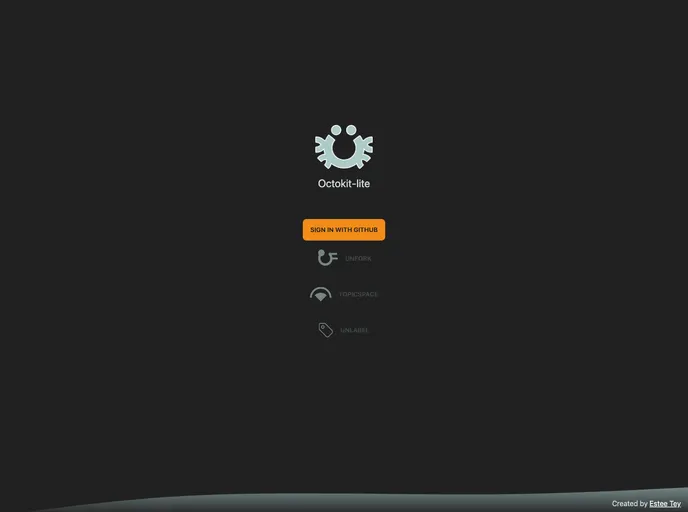




Web UI to perform GitHub operations on multiple repositories
Overview
Octokit Lite appears to be a game-changer for developers and project maintainers who find themselves bogged down by cluttered repositories and unnecessary forks on GitHub. With its streamlined functionalities like unforking repositories, managing topics, and removing labels, this tool offers a straightforward, user-friendly solution to common repository management challenges. Whether you're tidying up your GitHub profile after Hacktoberfest or simply trying to keep your project organized, Octokit Lite can help you maintain clarity and efficiency in your workflows.
What stands out about Octokit Lite is its focus on user convenience. With the increasing number of forks and labels one can accumulate over time, managing these can become cumbersome. Octokit Lite provides features that not only simplify these processes but also enhance the user's ability to streamline their repository management.
Features
-
Unfork: Easily delete unwanted GitHub forks with a user-friendly interface. Choose what repos to delete and view your repository count before finalizing the action.
-
TopicSpace: Apply or delete multiple topics, such as “Hacktoberfest,” across multiple repositories. This feature allows for efficient tagging and organization of your projects.
-
Unlabel: Quickly remove multiple labels from selected issues, making it simple to clear up any outdated or irrelevant tags in your repositories after specific events, like Hacktoberfest.
-
Sorting Options: Both the Unfork and TopicSpace features include sorting options, allowing you to organize repositories by inactivity level or issue count for more efficient management.
-
Existing Topic/Label Display: View existing topics and labels associated with your repositories, providing clarity on what tags are currently active.
-
Shell Command Backup: For those who want an extra layer of security, Octokit Lite can generate a shell command to backup forks before deletion.
-
User-Friendly: The tool is designed to be intuitive, making it accessible even to those who may not be as tech-savvy.
-
Tech Stack: Built with modern technologies such as TypeScript, Next.js, and Tailwind CSS to ensure a responsive and appealing user interface.
- Next.js
Next.js is a React-based web framework that enables server-side rendering, static site generation, and other powerful features for building modern web applications.
- React
React is a widely used JavaScript library for building user interfaces and single-page applications. It follows a component-based architecture and uses a virtual DOM to efficiently update and render UI components
- Tailwind
Tailwind CSS is a utility-first CSS framework that provides pre-defined classes for building responsive and customizable user interfaces.
- daisyUI
daisyUI adds classes to Tailwind CSS for all common UI components. Classes like btn, card, etc. This allows us to focus on important things instead of making basic elements for every project.
- Supabase
Supabase is an open source Firebase alternative. Start your project with a Postgres database, Authentication, instant APIs, Edge Functions, Realtime subscriptions, and Storage.
- Fullstack

A fullstack boilerplate provides a starter application that includes both frontend and backend. It should include database, auth, payments, user roles and other backend services to build a fully featured saas or webapps.
- Eslint

ESLint is a linter for JavaScript that analyzes code to detect and report on potential problems and errors, as well as enforce consistent code style and best practices, helping developers to write cleaner, more maintainable code.
- Postcss
PostCSS is a popular open-source tool that enables web developers to transform CSS styles with JavaScript plugins. It allows for efficient processing of CSS styles, from applying vendor prefixes to improving browser compatibility, ultimately resulting in cleaner, faster, and more maintainable code.
- Typescript

TypeScript is a superset of JavaScript, providing optional static typing, classes, interfaces, and other features that help developers write more maintainable and scalable code. TypeScript's static typing system can catch errors at compile-time, making it easier to build and maintain large applications.