
Tools Dapp Boilerplate
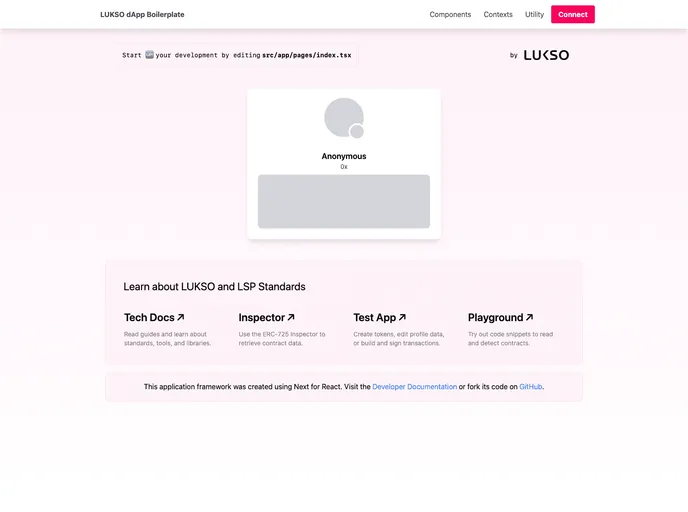


LUKSO dApps template in Next.js
Overview
The LUKSO dApp Boilerplate is an impressive open-source framework built on TypeScript and Next.js, designed to simplify the development of decentralized applications (dApps) on the LUKSO network. With its robust structure and comprehensive features, developers can efficiently build, test, and deploy dApps without starting from scratch. This platform particularly stands out for its focus on reusable components and easy integration with existing blockchain technologies.
This boilerplate serves as a powerful starting point for developers of all levels looking to engage with the LUKSO ecosystem. By providing a variety of built-in tools and resources, it streamlines the workflow and enhances productivity, making dApp creation more accessible and less time-consuming.
Features
- Reusable Components: Built-in components for Universal Profiles, Assets, and Vaults promote efficiency and consistency throughout your application.
- Shared Contexts: Easy management of profiles, networks, and extensions through shared contexts, which enhances state management across the app.
- Network Detection: Automatic detection of network interfaces and metadata simplifies connectivity and interaction with different blockchains.
- Multiple Providers: Offers diverse connection options, including Web3 Onboard and Wallet Connect, providing flexibility in user preferences.
- Built-in Libraries: Integrates popular libraries like ethers.js, erc725.js, and lsp-smart-contracts to facilitate smart contract interactions and blockchain functionalities.
- UI Flexibility: Utilizes Tailwind CSS for styling, enabling developers to create responsive and modern interfaces effortlessly.
- Easy Setup: Clear instructions for cloning the repository and installing necessary packages ensure a smooth setup process for new projects.
- Next.js
Next.js is a React-based web framework that enables server-side rendering, static site generation, and other powerful features for building modern web applications.
- React
React is a widely used JavaScript library for building user interfaces and single-page applications. It follows a component-based architecture and uses a virtual DOM to efficiently update and render UI components
- Tailwind
Tailwind CSS is a utility-first CSS framework that provides pre-defined classes for building responsive and customizable user interfaces.
- Eslint

ESLint is a linter for JavaScript that analyzes code to detect and report on potential problems and errors, as well as enforce consistent code style and best practices, helping developers to write cleaner, more maintainable code.
- Postcss

PostCSS is a popular open-source tool that enables web developers to transform CSS styles with JavaScript plugins. It allows for efficient processing of CSS styles, from applying vendor prefixes to improving browser compatibility, ultimately resulting in cleaner, faster, and more maintainable code.
- Typescript

TypeScript is a superset of JavaScript, providing optional static typing, classes, interfaces, and other features that help developers write more maintainable and scalable code. TypeScript's static typing system can catch errors at compile-time, making it easier to build and maintain large applications.
- Vercel

Vercel offers built-in support for deploying and hosting Next.js applications, making it a popular choice among Next.js developers.