
Exiftool Web
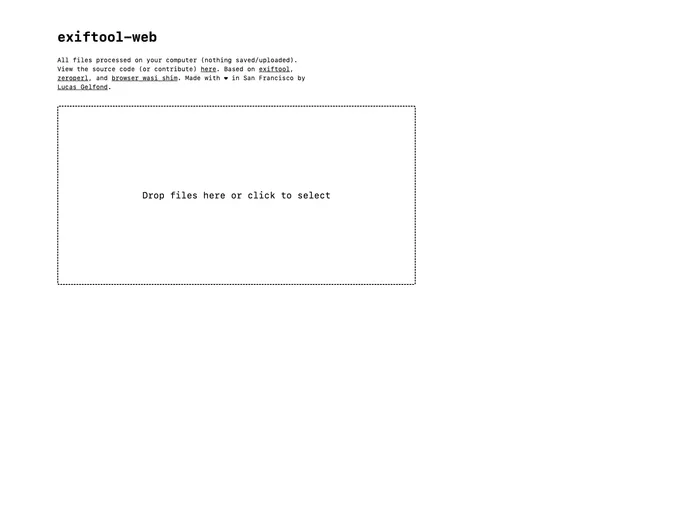

exiftool (OSINT image metadata utility) in the browser (via WebAssembly!)
Overview
The exiftool-webDemo is a groundbreaking web application that simplifies metadata extraction from images, making it accessible for non-programmers. Built with frontend technologies, specifically Svelte, this tool runs entirely client-side and requires no installation, thereby lowering the barrier to entry for users engaged in open source intelligence (OSINT) research. By utilizing advanced technologies like WASI and OPFS, it serves as a modern substitute for traditional command-line tools and outdated GUIs.
This project is noteworthy not only for its functionality but also for its innovative use of existing packages. It leverages zeroperl for Perl emulation and browser_wasi_shim to ensure smooth operation within web browsers. As OSINT researchers increasingly look for reliable tools to analyze publicly available data, this application meets that demand with a user-friendly approach.
Features
- Client-Side Operation: Runs entirely in the browser, removing the need for complex installations and making it easily accessible to everyone.
- Metadata Extraction: Utilizes exiftool to effectively harvest metadata from images, streamlining the analysis process for researchers.
- Svelte Framework: Built using Svelte, which allows for a sleek user interface and smooth performance.
- WASI Support: Emulates Perl capabilities in the browser, enabling the execution of Perl scripts without traditional setups.
- Future Expandability: Plans to add functionality for editing and removing EXIF data, offering enhanced privacy features for users.
- Offline Capabilities: Future developments aim to include service workers and a browser manifest, enhancing usability without internet connectivity.
- Open Source: Encourages community involvement through patches and issue reporting, fostering a collaborative development environment.
- Svelte
Svelte is a modern front-end framework that compiles your code at build time, resulting in smaller and faster applications. It uses a reactive approach to update the DOM, allowing for high performance and a smoother user experience.