
Oauth2 Server Laravel
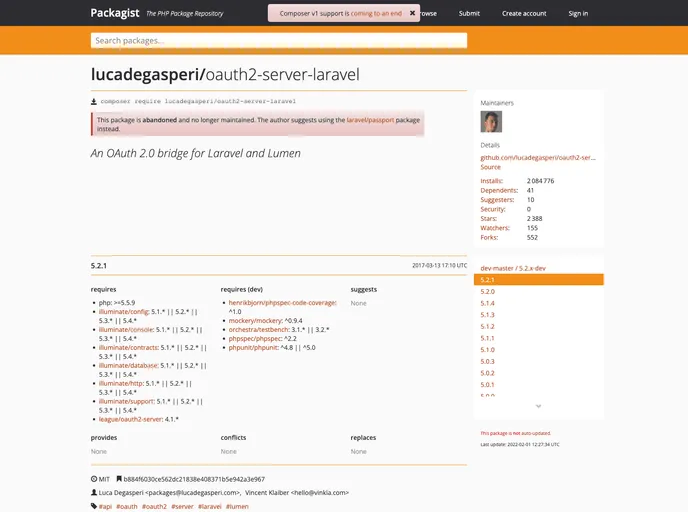
An OAuth 2.0 bridge for Laravel and Lumen [DEPRECATED FOR LARAVEL 5.3+]
Overview
The OAuth 2.0 Server for Laravel was once a powerful tool for developers looking to implement secure authentication and authorization solutions within their Laravel applications. However, it's important to note that this package is now deprecated for Laravel versions 5.3 and above, as Laravel has introduced the Passport package that streamlines this process. Despite its deprecation, the server still embodies strong principles of the OAuth 2.0 authorization specification, making it a noteworthy reference for understanding OAuth implementations.
As a secure authorization framework, this package was tailored for Laravel and Lumen, providing developers with a compliant solution backed by The League of Extraordinary Packages. Although the development has ceased for newer Laravel versions, those working with older versions may find this package useful for their applications, provided they have a solid understanding of OAuth 2.0 principles.
Features
- Standard Compliance: Built on the OAuth 2.0 specification, ensuring adherence to security and authorization protocols.
- Laravel Compatibility: Designed specifically for Laravel and Lumen frameworks, making integration seamless for developers familiar with these platforms.
- Extensive Documentation: Comprehensive resources available to help developers implement an OAuth 2.0 server effectively, simplifying the setup process.
- Community Engagement: Bugs and feature requests can be reported on GitHub, promoting community-driven development and support.
- Open Source License: Released under the MIT License, allowing for easy modification and distribution while supporting open-source principles.
- Developed by Experts: The package is largely based on work by Alex Bilbie and maintained by a community dedicated to quality coding practices.
- Version Compatibility: Compatible with various Laravel versions, providing a pathway for developers using older frameworks to implement OAuth 2.0 functionalities.