
Laravel Rest Api
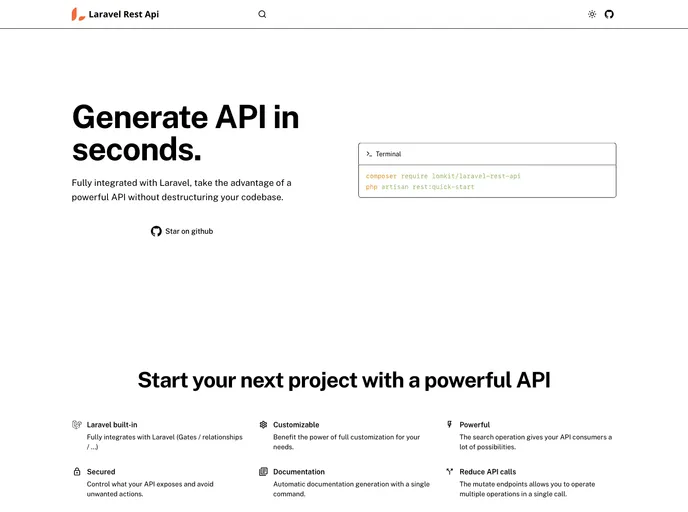

Generate Api in seconds
Overview
Laravel Rest Api provides a seamless and elegant solution for developers looking to expose their applications through an API. Leveraging the full power of the Laravel ecosystem, this package simplifies the process of managing API interactions, allowing for efficient integration with various tools and frameworks. With support for PHP 8.2+ and Laravel 11+, it ensures that you are working with the latest technologies available for modern web applications.
This package features a comprehensive set of endpoints that not only allow for data retrieval but also support actions like mutating, searching, and deleting resources. The elegance of Laravel shines through in its design, making it a robust choice for both novice and experienced developers seeking to enhance their applications with powerful API capabilities.
Features
-
Multiple Endpoints: Easily manage resources with support for various operations such as mutating, searching, showing, and deleting.
-
Seamless Integration: Leverage the Laravel ecosystem including Policies, Controllers, and Eloquent for a more cohesive development experience.
-
Comprehensive Documentation: Access detailed installation and usage instructions to get started quickly and effectively.
-
API Search Method: Utilize a robust search method to efficiently find and retrieve data from your application.
-
Roadmap and Metrics Support: Plan ahead with a clear roadmap and monitor your application's performance using built-in metrics.
-
Response Class Refactoring: Enhance code maintainability through a refactored response class for a cleaner implementation.
-
Includes Alias: Simplify resource inclusions in your API requests with an alias feature, improving readability and usability.
- Laravel
Laravel is a powerful and elegant PHP framework that provides developers with a comprehensive set of tools and features to build robust web applications. It follows the Model-View-Controller (MVC) architectural pattern, offering a clean and organized structure for writing efficient and maintainable code.
- Graphql
A website that uses GraphQL as a query language to manage data fetching and state management. This includes features such as a strongly typed schema, client-side caching, and declarative data fetching to streamline data management and optimize website performance.