Samuelamoah
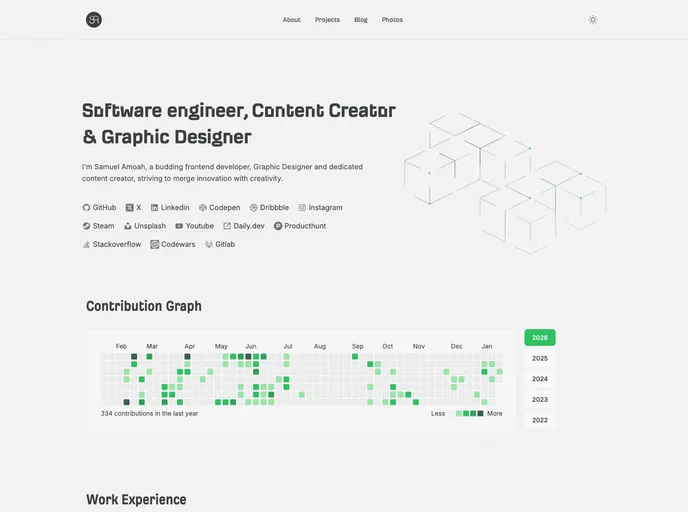
My personal portfolio website built with Next.js, Tailwind CSS and Sanity.
Overview:
This article is a product analysis of a tech stack used for building websites. The tech stack includes NextJS as the UI framework, Vercel for hosting and deployment, Sanity.io as the headless CMS and content lake, TailwindCSS/CSS for styling and UI, Umami for analytics, and PlanetScale for database storage for analytics. The article provides instructions on how to install and set up the theme, as well as additional information and resources for further guidance.
Features:
- NextJS: A popular UI framework for building websites.
- Vercel: A hosting and deployment platform that works well with NextJS.
- Sanity.io: A headless CMS and content lake that provides a backend for managing content.
- TailwindCSS/CSS: Styling and UI frameworks that make it easy to create visually appealing websites.
- Umami: An analytics tool that helps track and analyze website usage.
- PlanetScale: A database storage solution specifically designed for analytics data.
- Next Themes: Provides color themes for the NextJS framework.
- React Refractor: A syntax highlighting tool for React projects.
Summary:
This article analyzes a tech stack used for building websites and provides step-by-step instructions for installing and setting up the theme. The tech stack includes NextJS, Vercel, Sanity.io, TailwindCSS/CSS, Umami, PlanetScale, Next Themes, and React Refractor. The installation guide explains how to clone the repository, configure environment variables, and run the project locally. This resource is helpful for developers looking to build websites using this specific tech stack.